Thursday, August 6, 2026
Home Blog

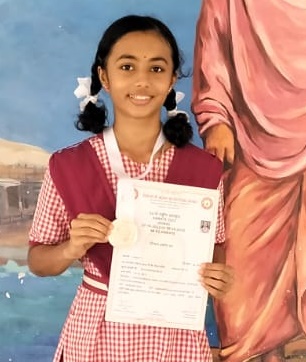
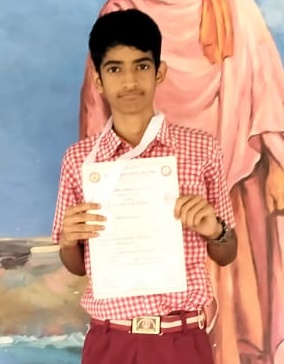
ರಾಷ್ಟ್ರ ಮಟ್ಟದ ಕರಾಟೆ ಸ್ಪರ್ಧೆಯಲ್ಲಿ ವಿವೇಕಾನಂದ ಆಂಗ್ಲ ಮಾಧ್ಯಮ ವಿದ್ಯಾರ್ಥಿಗಳ ವಿಶೇಷ ಸಾಧನೆ

ವಿದ್ಯಾಭಾರತಿ ಅಖಿಲ ಭಾರತೀಯ ಶಿಕ್ಷಾ ಸಂಸ್ಥಾನ್: ವಿದ್ಯಾಭಾರತಿ ಕರ್ನಾಟಕ:

ರಾಷ್ಟ್ರ ಮಟ್ಟದ ಕರಾಟೆ ಸ್ಪರ್ಧೆ:

ವಿವೇಕಾನಂದ ಆಂಗ್ಲ ಮಾಧ್ಯಮ ವಿದ್ಯಾರ್ಥಿನಿ ಅಭಿಜ್ಞಾ ಶಾಂಭವಿ ಎಸ್.ಜಿ.ಎಫ್.ಐಗೆ ಆಯ್ಕೆ
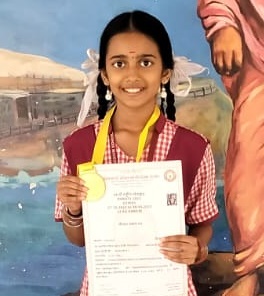
ವಿದ್ಯಾಭಾರತಿ ಸಂಯೋಜಿತ ಶಾಲೆಗಳ ರಾಷ್ಟ್ರ ಮಟ್ಟದ ಕರಾಟೆ ಸ್ಪರ್ಧೆಯು ದಿನಾಂಕ ಒಕ್ಟೋಬರ್ 28,29, 30 ರಂದು ಮಧ್ಯಪ್ರದೇಶದ ದೇವಾಸ್‍ನಲ್ಲಿ ನಡೆಯಿತು. ಈ ಸ್ಪರ್ದೆಯಲ್ಲಿ ವಿವೇಕಾನಂದ ಆಂಗ್ಲ ಮಾಧ್ಯಮ ಶಾಲೆಯ ವಿದ್ಯಾರ್ಥಿಗಳು ಹಲವು ಪ್ರಶಸ್ತಿಗಳನ್ನು ಪಡೆದುಕೊಂಡಿರುತ್ತಾರೆ.

ಬಾಲವರ್ಗದ ಬಾಲಕಿಯರ ವಿಭಾಗದಲ್ಲಿ:(14ರ ವಯೋಮಾನದ) ಅಭಿಜ್ಞಾ ಶಾಂಭವಿ, 6ನೇ ತರಗತಿ(ಶ್ರೀ ಸುಧೀರ್ ಮತ್ತು ಶ್ರೀಮತಿ ಲತಾ ದಂಪತಿ ಪುತ್ರಿ) –ಪ್ರಥಮ ಸ್ಥಾನ ದೊಂದಿಗೆ ಚಿನ್ನ ಪದಕ, ಮಹತಿ, 6ನೇ ತರಗತಿ(ಶ್ರೀ ಶಿವರಂಜನ್.ಎಂ ಮತ್ತು ಶ್ರೀಮತಿ ಲಾವಣ್ಯ ಭಟ್ ದಂಪತಿ ಪುತ್ರಿ)- ದ್ವಿತೀಯ ಸ್ಥಾನದೊಂದಿಗೆ ಬೆಳ್ಳಿ ಪದಕ ಪಡೆದಿರುತ್ತಾಳೆ.

ಕಿಶೋರ ವರ್ಗದ ಬಾಲಕರ ವಿಭಾಗದಲ್ಲಿ (17ರ ವಯೋಮಾನದ) – ಪ್ರಮಥ.ಎಂ.ಭಟ್, 10ನೇ ತರಗತಿ(ಶ್ರೀ ರವಿನಾರಾಯಣ.ಎಂ ಮತ್ತು ಶ್ರೀಮತಿ ಶರಾವತಿ ದಂಪತಿ ಪುತ್ರ) – ದ್ವಿತೀಯ ಸ್ಥಾನದೊಂದಿಗೆ ಬೆಳ್ಳಿ ಪದಕ ಪಡೆದಿರುತ್ತಾನೆ.

ಪ್ರಥಮ ಸ್ಥಾನ ಪಡೆದ ಅಭಿಜ್ಞಾ ಶಾಂಭವಿ ಎಸ್.ಜಿ.ಎಫ್.ಐ ಗೆ ಆಯ್ಕೆಯಾಗಿರುತ್ತಾಳೆ ಎಂದು ಶಾಲಾ ಮುಖ್ಯೋಪಾಧ್ಯಾಯರು ಶಾಲಾ ಪ್ರಕಟಣೆಯಲ್ಲಿ ತಿಳಿಸಿರುತ್ತಾರೆ

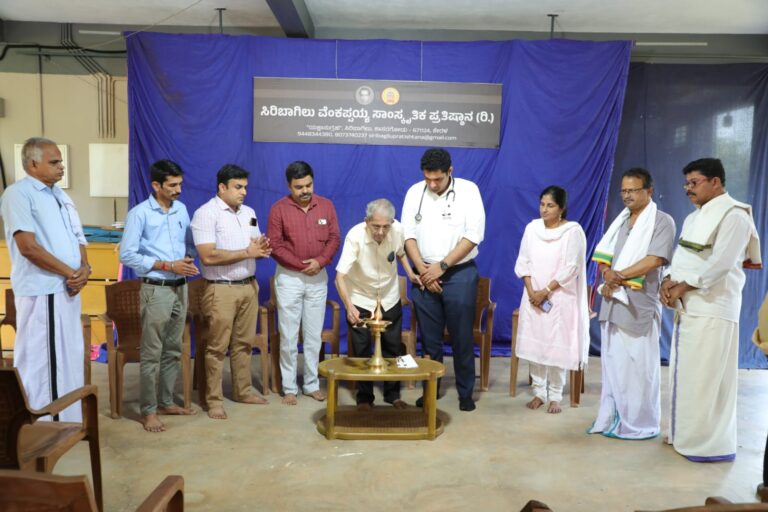
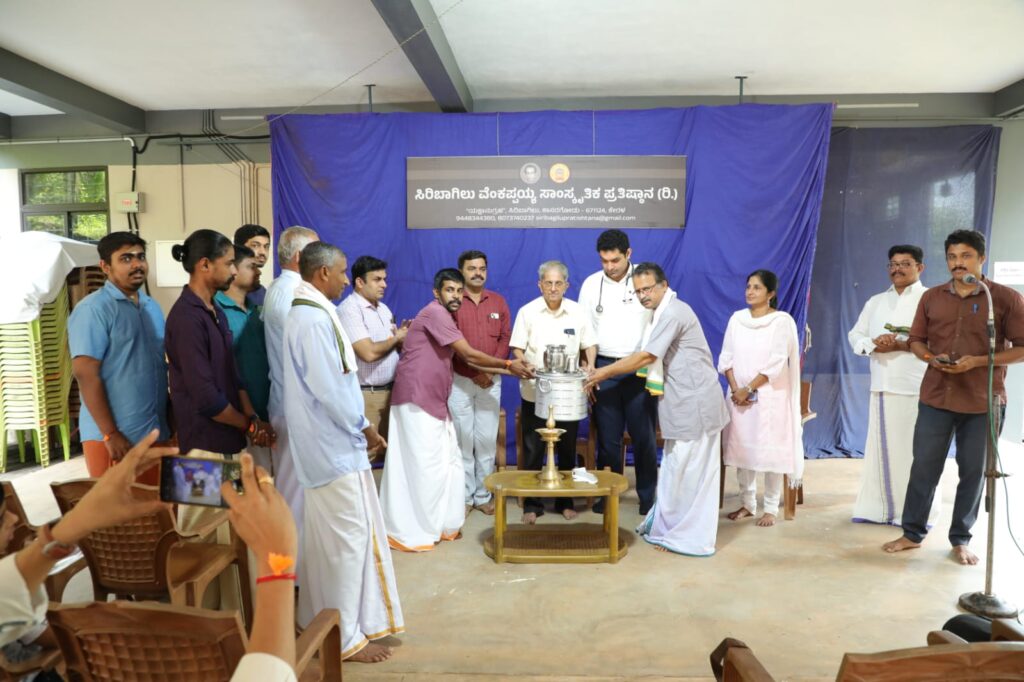
ಸಿರಿಬಾಗಿಲು ವೆಂಕಪ್ಪಯ್ಯ ಸಾಂಸ್ಕೃತಿಕ ಭವನದಲ್ಲಿ ಉಚಿತ ವೈದ್ಯಕೀಯ ಶಿಬಿರ ಉದ್ಘಾಟಿಸಿದ ಡಾ.ಬಿ.ಯಸ್. ರಾವ್

0

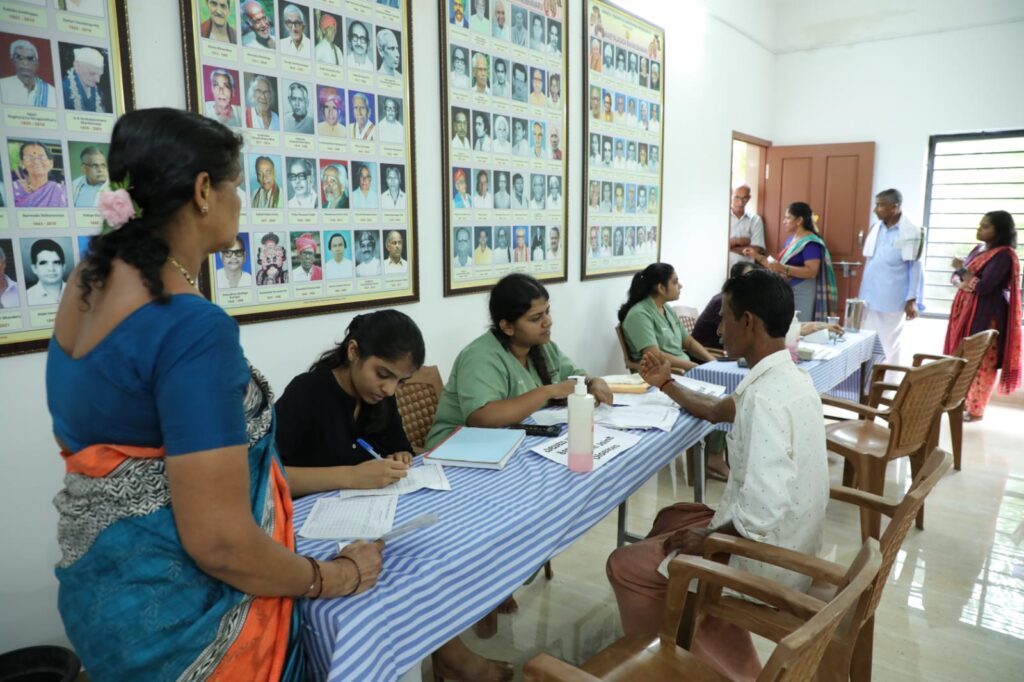
ಕೆ.ಯಂ.ಸಿ.ಹಾಸ್ಪಿಟಲ್ ಅತ್ತಾವರ ಮಂಗಳೂರು ಇವರ ನೇತೃತ್ವದಲ್ಲಿ ಸಾಂಸ್ಕೃತಿಕ ಕ್ಷೇತ್ರದ ಜನಪ್ರಿಯ ಸಂಸ್ಥೆಯಾದ ಸಿರಿಬಾಗಿಲು ವೆಂಕಪ್ಪಯ್ಯ ಸಾಂಸ್ಕೃತಿಕ ಪ್ರತಿಷ್ಠಾನದ ಸಾಂಸ್ಕೃತಿಕ ಭವನದಲ್ಲಿ ಉಚಿತ ವೈದ್ಯಕೀಯ ತಪಾಸಣೆ ನಡೆಯಿತು. ಗಡಿನಾಡು ಕಾಸರಗೋಡಿನ ಹಿರಿಯ ವೈದ್ಯ ಡಾ. ಬಿ.ಯಸ್. ರಾವ್ ಅವರು ದೀಪಬೆಳಗಿಸಿ ಉದ್ಘಾಟಿಸಿ ಗ್ರಾಮೀಣ ಪ್ರದೇಶದ ಜನರಲ್ಲಿ ಆರೋಗ್ಯ ದ ಬಗ್ಗೆ ಜಾಗೃತಿ ಮೂಡಿಸುವ ಶಿಬಿರ ನಡೆಸುತ್ತಿರುವ ಕೆ.ಯಂ.ಸಿ.ಯವರ ಕಾರ್ಯ ಸ್ತುತ್ಯರ್ಹ ವೆಂದರು.

ಸಾಂಸ್ಕೃತಿಕ ವಾಗಿ ಹಲವು ಕಾರ್ಯಕ್ರಮಗಳನ್ನು ಆಯೋಜಿಸಿದ ಪ್ರತಿಷ್ಠಾನ ತನ್ನ ಸಾಂಸ್ಕೃತಿಕ ಕ್ಷೇತ್ರದ ಹೊರತಾದ ಚಟುವಟಿಕೆ ಮೆಚ್ಚುವಂತಹದು. ಈ ಹಿಂದೆ ಕೊವಿಡ್ ಸಮಯದಲ್ಲೂ ಪ್ರತಿಷ್ಠಾನವು ಕೊರೋನಾ ಯಕ್ಷಗಾನದ ಮೂಲಕ ಸಮಾಜಕ್ಕೆ ಜಾಗೃತಿ ಮೂಡಿಸಿ ವಿಶ್ವ ಆರೋಗ್ಯ ಸಂಸ್ಥೆಯ ಮೆಚ್ಚುಗೆಗೆ ಪಾತ್ರರಾದುದನ್ನು ನೆನಪಿಸಿದರು.


ಕೆ.ಯಂ.ಸಿ.ಯ ಕ್ಯಾನ್ಸರ್ ತಜ್ಞ ವ್ಯೆದ್ಯರಾದ ಡಾ.ಅಭಿಷೇಕ್ ಕೃಷ್ಣ ಅವರು ಕ್ಯಾನ್ಸರ್ ಕುರಿತಾದ ಮಾಹಿತಿ ನೀಡಿದರು. ನಾಗರಿಕರು ದುಶ್ಟಟ ದಿಂದ ಮುಕ್ತರಾಗಿ , ಹಿತ ಮಿತವಾದ ಆಹಾರ ಸೇವನೆ ಯಿಂದ ಆರೋಗ್ಯ ವಂತರಾಗಿರಿ. ಕ್ಯಾನ್ಸರ್ ರೋಗಿಗಳು ಭಯ ಪಡ ಬೇಕಾಗಿಲ್ಲ. ಈಗ ರೋಗ ಲಕ್ಷಣಗಳು ಯಾವ ಹಂತದಲ್ಲಿದ್ದರೂ ಈಗ ಗುಣಪಡಿಸಬಹುದು.


ಕೆ.ಯಂ. ಸಿ.ಯ ಶಿಬಿರದ ಸಂಘಟಕ ಉದಯ ಭಟ್ ರವರು ಈ ಹಿಂದೆ ನಡೆಸಿದ ಹಲವು ಶಿಬಿರ,ಅದರಿಂದ ನಾಗರಿಕರಿಗಾದ ಪ್ರಯೋಜನಗಳು ವಿವರಿಸಿದರು. ಮಣಿಪಾಲ ಕೆ.ಯಂ. ಸಿ.ಯ ನೇತ್ರ ತಜ್ಞೆ ಡಾ.ಶೈಲಜಾ, ಮಂಗಳೂರಿನ ಡಾ. ನಾರಾಯಣ ಮಧೂರು. ಡಾ.ರಾಜಾರಾಮ ದೇವಕಾನ, ಶಿವನಾರಾಯಣ ಗೆಳೆಯರ ವಾಟ್ಸಾಪ್ ಬಳಗದ ಅಧ್ಯಕ್ಷರಾದ ಶ್ರೀ ವಾಸುದೇವ ಕಾರಂತ ಉಪಸ್ಥತರಿದ್ದರು.


ಶಿವನಾರಾಯಣ ಗೆಳೆಯರ ವಾಟ್ಸಾಪ್ ಬಳಗದ ವತಿಯಿಂದ ಸಿರಿಬಾಗಿಲು ಪ್ರತಿಷ್ಠಾನಕ್ಕೆ ಬೃಹತ್ ಮೊತ್ತದ ಪಾತ್ರೆ ಸಾಮಗ್ರಿಗಳನ್ನು ಬಳಗದ ಸದಸ್ಯರು ಜತೆ ಗೂಡಿ ಡಾ.ಬಿ.ಯಸ್. ರಾವ್ ಮುಖಾಂತರ ಪ್ರತಿಷ್ಠಾನದ ಅಧ್ಯಕ್ಷ ರಾಮಕೃಷ್ಣ ಮಯ್ಯ ಸಿರಿಬಾಗಿಲು ಇವರಿಗೆ ಹಸ್ತಾಂತರಿಸಿದರು. ರಾಮಕೃಷ್ಣ ಮಯ್ಯ ಅವರು ಅತಿಥಿಗಳನ್ನು ಸ್ವಾಗತಿಸಿದರು.

ಶ್ರೀ ಜಗದೀಶ ಕೆ.ಕೂಡ್ಲು ಇವರು ನಿರೂಪಿಸಿ, ಶ್ರೀ ಮೋಹನ್ ಕುಮಾರ್ ಶೆಟ್ಟಿ ಸಿರಿಬಾಗಿಲು ವಂದಿಸಿದರು. ಆ ಬಳಿಕ ಪ್ರಸಿದ್ದ ವೈದ್ಯರುಗಳಿಂದ 335 ಕ್ಕೂ ಹೆಚ್ಚು ನಾಗರಿಕರಿಗೆ ಉಚಿತ ವೈದ್ಯಕೀಯ ತಪಾಸಣೆ ನಡೆಸಲಾಯಿತು. ಸಿರಿಬಾಗಿಲು ಪ್ರತಿಷ್ಠಾನದ ವತಿಯಿಂದ ಉಚಿತ ಕನ್ನಡಕ ಹಾಗು ಔಷದಗಳನ್ನು ನೀಡಲಾಯಿತು.

ಜಟಾಯುವಿನ ಪ್ರಾಣ ಅದರ ರೆಕ್ಕೆಯಲ್ಲಿಯೇ ಇದೆ ಎಂದು ರಾವಣನಿಗೆ ಮೊದಲೇ ಗೊತ್ತಿತ್ತು!

ಜಟಾಯುವಿನ ಪ್ರಾಣ ಅದರ ರೆಕ್ಕೆಯಲ್ಲಿಯೇ ಇದೆ ಎಂದು ರಾವಣನಿಗೆ ಮೊದಲೇ ಗೊತ್ತಿತ್ತು!

ಹೌದು. ಹಾಗಾದರೆ ಪ್ರಾಣದ ಮರ್ಮವನು ಅರಿತು ನಾವು ಹೋರಾಟ ನಡೆಸೋಣ ಎಂದು ರಾವಣ ಜಟಾಯುವಿನಲ್ಲಿ ಹೇಳಿದ್ದು ಯಾಕೆ? ಈ ಪ್ರಶ್ನೆಗೆ ಉತ್ತರ ಹುಡುಕುವುದು ಅಷ್ಟು ಸುಲಭವಲ್ಲ. ಒಬ್ಬೊಬ್ಬರು ಒಂದೊಂದು ರೀತಿ ಉತ್ತರಿಸಬಹುದು.

ಆದರೆ ನಿಜವಾದ ಕಾರಣ ಏನು? ರಾವಣ ಜಟಾಯುವಿನಲ್ಲಿ ಯಾಕೆ ಆ ರೀತಿ ಹೇಳಿದ. ವಾಸ್ತವವಾಗಿ ಹಕ್ಕಿಗಳ ಪ್ರಾಣ ರೆಕ್ಕೆಯಲ್ಲಿ ಇರುತ್ತದೆ ಎಂದು ರಾವಣ ತಿಳಿಯದವನೇ? ಖಂಡಿತಾ ಅಲ್ಲ. ಹಾಗೆಂದುಕೊಂಡರೆ ನಮ್ಮಷ್ಟು ಮೂರ್ಖರು ಬೇರೆ ಯಾರೂ ಅಲ್ಲ.

ನಿಜವಾಗಿ ನೋಡಿದರೆ ರಾವಣ ಮಹಾಜ್ಞಾನಿ ಎಂದು ಪುರಾಣಗಳಲ್ಲಿ ಉಲ್ಲೇಖಿಸಲಾಗಿದೆ. ಅಂತಹ ಶಾಸ್ತ್ರ ಪಾರಂಗತನಾದ ರಾವಣನಿಗೆ ಜಟಾಯುವಿನಲ್ಲಿ ಸುಳ್ಳು ಹೇಳುವ ಅಥವಾ ಹಕ್ಕಿಗಳ ಪ್ರಾಣ ಇರುವುದು ರೆಕ್ಕೆಗಳಲ್ಲಿ ಎಂಬುದು ತಿಳಿಯದವನಂತೆ ನಟಿಸುವ ಅಗತ್ಯ ಯಾಕೆ ಬಂತು ಎಂಬುದು ನಿಗೂಢ ಸಂಗತಿಯೇನಲ್ಲ!

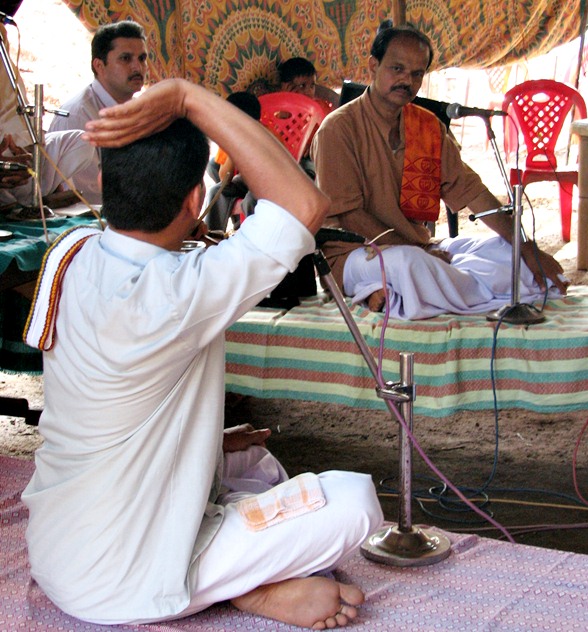
ರಾಮಾಯಣದ ಈ ಭಾಗ ಯಕ್ಷಗಾನದ ತಾಳಮದ್ದಳೆಯ ಒಂದು ರಸವತ್ತಾದ ಚರ್ಚೆಯ ಭಾಗ. ಕೆಲವೊಮ್ಮೆ ಜಟಾಯು ಪಾತ್ರಧಾರಿ ರಾವಣವ ಪಾತ್ರಧಾರಿಯೊಡನೆ “ಹಕ್ಕಿಗಳ ಪ್ರಾಣ ರೆಕ್ಕೆಯಲ್ಲಿ ಇದೆ ಎನ್ನುವ ವಿಚಾರ ತಿಳಿಯದಷ್ಟು ಹೆಡ್ಡ ನೀನು” ಎಂದು ಕೆಣಕುತ್ತಾರೆ.

ಅದಕ್ಕೆ ರಾವಣ ಪಾತ್ರಧಾರಿ “ನೀನು ಎಲ್ಲ ಹಕ್ಕಿಯಂತಲ್ಲ, ನಿನ್ನಲ್ಲಿ ವಿಶೇಷ ಶಕ್ತಿ, ಸಾಮರ್ಥ್ಯ ಇರುವುದರಿಂದಲೇ ನಿನ್ನ ಪ್ರಾಣದ ಮೂಲದ ಬಗ್ಗೆ ಕೇಳಿದೆ” ಎಂದು ತನ್ನನ್ನು (ರಾವಣನನ್ನು) ಸಮರ್ಥಿಸಿಕೊಳ್ಳುತ್ತಾರೆ.

ಆದರೆ ರಾವಣನು ಜಟಾಯುವಿನಲ್ಲಿ ಪ್ರಾಣದ ಮೂಲದ ಬಗ್ಗೆ ಕೇಳಲು ಬೇರೆಯೇ ಆದ ಕಾರಣವಿದೆ. ಆತನಿಗೆ ಜಟಾಯುವಿನ ಪ್ರಾಣ ಇರುವುದು ರೆಕ್ಕೆಯಲ್ಲಿ ಎಂದು ಖಚಿತವಾಗಿ ಗೊತ್ತಿತ್ತು.

ಆದರೂ ಈ ರೀತಿಯ ನಾಟಕ ಯಾಕೆ ಎಂಬ ಕುತೂಹಲ ಎಲ್ಲರಲ್ಲಿಯೂ ಇದ್ದೇ ಇರುತ್ತದೆ. ಕೆಲವರಿಗಾದರೂ ಇದರ ಕಾರಣದ ಬಗ್ಗೆ ಅರಿವಿರಬಹುದು. ಆದರೆ ನಿಜವಾದ ಕಾರಣ ಏನು? ಇದರ ಬಗ್ಗೆ ಮುಂದಿನ ಲೇಖನದಲ್ಲಿ ಚರ್ಚಿಸೋಣ.

ಬರಹ: ಯಕ್ಷಚಿಂತಕ

6th Standard, Science, Chapter 3, Separation of Substances

0

6th Standard, Science, Chapter 3

Separation of Substances

Exercises

1. Why do we need to separate different components of a mixture? Give two examples.

Answer: We see that, before we use a substance, we need to separate harmful or non-useful substances that may be mixed with it. Sometimes, we separate even useful components if we need to use them separately.

Example 1: Tea leaves are separated from the liquid with a strainer, while preparing tea. Example 2: Milk or curd is churned to separate the butter

2. What is winnowing? Where is it used?

Answer: Separating method of heavier and lighter components of a mixture by wind or by blowing air is called winnowing. Winnowing is used to separate heavier and lighter components of a mixture by wind or by blowing air.

3. How will you separate husk or dirt particles from a given sample of pulses before cooking?

Answer: The husk particles are carried away by the wind. The seeds of grain get separated and form a heap near the platform for winnowing. The separated husk is used for many purposes such as fodder for cattles.

4. What is sieving? Where is it used?

Answer: We need to remove impurities and bran that may be present in the flour. We use a sieve and pour the flour into it. This method is called sieving. It is used before us cooking.

5. How will you separate sand and water from their mixture?

Answer: Sand and water can be separated from their mixture through sedimentation and decantation. When the heavier component like sand settles bottom after water is added to it, the process is called sedimentation. When the water is removed, sand will remain and the process is called decantation. If any fine sand particles are still floating or were accidentally poured over, we can achieve complete separation using a paper filter by filtration.

6. Is it possible to separate sugar mixed with wheat flour? If yes, how will you do it?

Answer: Yes. It is possible to separate sugar mixed with wheat flour. We can separate sugar mixed with wheat flour by sieving method. The smaller, finer wheat flour particles will pass through the holes. The larger sugar crystals will be retained in the sieve.

7. How would you obtain clear water from a sample of muddy water?

Answer: We can obtain clear water from a sample of muddy water by sedimentation,

Decantation and Filtration method. Heavier mud particles will settle at the bottom. Carefully pour the clearer water at the top into another container without disturbing the mud at the bottom. Pour this decanted water through a filter paper or a clean cotton cloth to remove any remaining mud.

8. Fill up the blanks

(a) The method of separating seeds of paddy from its stalks is called threshing.

(b) When milk, cooled after boiling, is poured onto a piece of cloth the cream (malai) is left behind on it. This process of separating cream from milk is an example of filtration.

(c) Salt is obtained from seawater by the process of evaporation.

(d) Impurities settled at the bottom when muddy water was kept overnight in a bucket. The clear water was then poured off from the top. The process of separation used in this example is called sedimentation and decantation.

9. True or false?

(a) A mixture of milk and water can be separated by filtration. – False

(b) A mixture of powdered salt and sugar can be separated by the process of winnowing. – False

(c) Separation of sugar from tea can be done with filtration. – False

(d) Grain and husk can be separated with the process of decantation. – False

10. Lemonade is prepared by mixing lemon juice and sugar in water. You wish to add ice to cool it. Should you add ice to the lemonade before or after dissolving sugar? In which case would it be possible to dissolve more sugar?

Answer: We should add ice to the lemonade after dissolving sugar. In this case it would be possible to dissolve more sugar. It is possible to dissolve more sugar before adding the ice, because higher water temperature increases sugar solubility. 

SUGGESTED PROJECTS AND ACTIVITIES

1. Visit a nearby dairy and report about the processes used to separate cream from milk.

2. You have tried a number of methods to separate impurities like mud from water. Sometimes, the water obtained after employing all these processes could still be a little muddy. Let us see if we can remove even this impurity completely. Take this filtered water in a glass. Tie a thread to a small piece of alum.

Suspend the piece of alum in the water and swirl. Did the water become clear?

What happened to the mud? This process is called loading. Talk to some elders in your family to find out whether they have seen or used this process.

7th Standard, English, Second Language, Chapter 3 – EKALAVYA

7th Standard, English, Second Language, Chapter 3

EKALAVYA

1. “He who has done this, will one day be master of us all”- in this sentence

a. ‘he’ refers to the unknown painter slave Sebastian.

b. ‘this’ refers to a beautiful painting of the Blessed Virgin.

c. ‘us’ refers to Murillo and his students.

2 Choose the correct answer:

A. The passage is mainly about

a. the Blessed Virgin b. Sebastian c. Murillo d. father

Answer: b. Sebastian

B. Sebastian was Murillo’s

a. student

b. slave

c. friend

d. master

Answer: b. slave

C. The way Sebastian learnt his art secretly is similar to the story of ___________in the Mahabharata.

 a. Arjuna b. Drona c. Ekalavya d. fawns

Answer:  c. Ekalavya

ಇನ್ನಷ್ಟು ಪಾಠಗಳ ಪ್ರಶ್ನೋತ್ತರಗಳನ್ನು ಪಡೆಯಲು ಹಾಗೂ ನಮ್ಮ ವೆಬ್ ಸೈಟ್ ವಾಟ್ಸಾಪ್ ಚಾನೆಲ್ ಸೇರಲು ಕೆಳಗಿನ ಲಿಂಕನ್ನು ಕ್ಲಿಕ್ ಮಾಡಿ.

https://whatsapp.com/channel/0029VagH9lF7z4kpCjusHb2Q

Click the link below to get questions and answers for more lessons and to join our website’s WhatsApp channel.

https://whatsapp.com/channel/0029VagH9lF7z4kpCjusHb2Q

Vocabulary

V1. Read the following sentence:

The girls in the class were quiet while the boys were noisy. 

The underlined words are opposites.

V1. Match the words in list ‘A’ with their opposites in list ‘B’

One is done for you.

 increase × decrease

            A                                              B

1. increase                               a. kind

2. worthy                                 b. loss

3. gain                                     c. decrease

4. humble                                d. unworthy

5. cruel                                    e. short

6. long                                     f. poor

7. rich                                      g. proud

Answer: 

1. increase × decrease

2. worthy × unworthy

3. gain × loss

4. humble × proud

5. cruel × kind

6. long × short

7. rich × poor

V2. Study the following sentence: 

I must learn archery in order to protect the fawns in our surroundings. (surround)

In this sentence, the word ‘surrounding’ is the noun form of the verb ‘surround’.

Fill in the blanks with suitable noun forms:

Use a dictionary if needed.

One is done for you.

 Is there any meaning (mean) in what you are saying?

Is there any meaning in what you are saying?

1. Children’s choosing (choose) is playing cricket.

2. The teaching (teach) of Krishna is found in the Bhagavad Geetha.

3. Don’t take hasty decision. (decide)

4. The teacher’s corrections (correct) in my homework helped me to score better than Peter.

5. I will be happy to have you as my teacher. (teach)

6. Narayan was considered the best boy for his intelligence. (intelligent) in solving the problem.

Now complete the following paragraph using the words given below:

Belling the Cat

The mice in the grocer’s shop ate plenty of grains and he had to suffer a great loss______ (lose). So, he bought a cat for the detection (detect) of the mice’s hiding place. During the meeting (meet) of the mice, one of them said that the cat’s movement (move) was soft and swift. So, there was a need for belling (bell) the cat. All the mice agreed that it was a good decision. (decide). Someone asked, “Who will bell the cat?” No answer came. As yet, the decision has not seen execution. (execute).

(movement, detection, meeting, loss, execution, belling, decision)

C2. Answer each of the following questions and compare your answers with those of your partner:

1. Why did Drona refuse to teach archery to Ekalavya?

Answer:  Drona cannot take as his pupil anyone other than a Kshatriya or a Brahmin. That is why Drona refuse to teach archery to Ekalavya.

2. How did Ekalavya learn archery?

Answer: Ekalavya learned archery through self-practice and deep devotion by making a clay statue of Guru Dronacharya, treating it as his teacher, and practicing intensely every day. After Drona refused to teach him directly, Ekalavya made a clay image of Drona in the forest and treated it as his real teacher. Day after day, he worshipped the statue and practiced archery with immense faith, courage, and hard work. His deep respect and single-minded dedication turned him into an exceptional master of the art, capable of incredible feats like shabdavedhi (shooting by sound).

3. What made Drona appreciate Ekalavya’s skill?

Answer:  Drona appreciated Ekalavya’s skill after witnessing his extraordinary ability to perform shabdavedhi (shooting an arrow by sound alone) specifically when Ekalavya silently filled a barking hunting dog’s mouth with arrows without hurting it.

4. How, according to Drona, did Ekalavya become a good archer?

Answer: According to Drona Ekalavya became a good archer solely through his devotion. His deep respect and single-minded dedication turned him into an exceptional master of the art, capable of incredible feats like shabdavedhi (shooting by sound).

C3. Answer the following questions after discussing with the other groups in the class:

1. Is it the duty of a student to protect the honour of the teacher?

Answer: Yes. It is considered the duty of a student to respect and protect the honour of their teacher. In traditional values, a Guru is held in the highest regard, akin to God. The teacher imparts wisdom, skills, and values, shaping a student’s life and character.

2. Narrate briefly the circumstances that made Ekalavya offer his right thumb as gurudakshina to Drona.

Answer: Ekalavya offered his right thumb because guru Drona requested it as his teacher’s fee (gurudakshina), aiming to protect his promise of making Arjuna the greatest archer. Drona and the princes found Ekalavya after seeing his amazing skill in silencing a dog with arrows without hurting it. When Drona learned Ekalavya treated him as his guru, Drona asked for his right thumb to stop him from becoming better than Arjuna. Ekalavya cut off his thumb and gave it to Drona without any hesitation.

3. Discuss with your partner/teacher about Ekalavya’s Gurudakshina.

Answer: Ekalavya’s Gurudakshina is a powerful story of extreme devotion and sacrifice, highlighting key aspects like: supreme respect for a guru, the pain of social unfairness, and the heavy cost of promises. Ekalavya treated a clay statue of Dronacharya as his real teacher. When Drona asked for his right thumb as a fee (gurudakshina), Ekalavya gave it instantly without any anger or hesitation.

G. Language work

Read the following sentences and see what kind of sentences they are:

a. The moon goes round the earth. (Assertive/Declarative) 

b. Do you know his phone number? (Interrogative) 

c. How lucky you are! (Exclamatory) 

d. Switch off the TV. (Imperative) 

e. Get me some water please. (Imperative) 

There are mainly four kinds of sentences. They are: 

i) Assertive /Declarative which states a fact and ends with a full stop.

ii) Interrogative a question which ends with question mark.

iii) Exclamatory expresses surprise, wonder or pity and ends with an exclamatory mark.

iv) Imperative expresses commands or requests and ends with a full stop.

G1. Look at these sentences. They have no punctuation marks at the end. Put the punctuation marks and classify the sentences. Write assertive, interrogative, exclamatory or imperative in the blanks given.

One is done for you.

1. Can you ride a motorbike? Interrogative 

2. Open the window. – Imperative

3. Sugar is bad for your teeth. – Assertive/Declarative

4. Please be quiet – Imperative

5. How hot it is! – Exclamatory

6. We went to Shirdi last month. – Assertive/Declarative

7. What a rude man he is! – Exclamatory

8. What are you doing there? – Interrogative

9. Don’t speak to me like that again. – Imperative

10. How quickly the holiday has passed! – Exclamatory

11. Shall I help you with your shopping? – Interrogative

12. The flight for Mumbai takes off at 11.30 p.m. – Assertive/Declarative

13. Ekalavya went to the forest. – Assertive/Declarative

14. How happy he was to see Drona! – Exclamatory

15. Get out of the way, my boy. – Imperative

16. Clean the blackboard, please. – Imperative

Pronunciation 

P1 A. Each word in this list contains a silent letter. 

Underline the silent letter in each word. Practise saying the words aloud.

One is done for you.

K n i f e, w r i s t, c l i m b, d e b t, w r i t e, C o m b, k n o c k, T o m b, k n i t, W r e c k,

D o u b t, K n o b, W r o n g, W r i g g l e

P1 B. Now put each word in the right column in this table.

Silent ‘b’ – debt, comb, tomb, doubt,

Silent ‘k’ – knife, knack, knit, knob

Silent ‘w’ – wrist, write, wreck, wrong, wriggle

Writing Practice 

Pair Work 

W1. A friend of yours wants to apply for a bus pass and wants you to fill the form for him. What questions will you ask him to get the information needed?

Student’s Bus Pass

Name: Ramesh

Age: 12.  Date of birth: 02.05.2014

Father’s name: Gangadhar

Residential address: 3/15, 2nd cross road, 1st main road, Pump well, Mangalore

Name of the school and address: Canara high School, Dongarakeri, Mangalore

Starting point of journey – Pump well.   Destination – Hampanakatta

Bus route No.: 19

Signature of the student – Ramesh

Headmaster’s signature with seal – Headmaster

Ask your friend, and fill in the form.

W2. Look at the signboards.

How many grammatical and spelling and factual mistakes can you spot in these signboards? Correct and rewrite them.

1. By instead of Buy

2. Vegetable instead of Visitable

3. 11 AM to PM

4. Price text Rs 15/-

5. Their instead of there

6. Fair instead of Fare

Further reading

1. Epic Characters of Mahabharatha – Prof. Mudambadithaya 

2. Read the story of Ekalavya – Shanta Rameshwar Rao

ಇನ್ನಷ್ಟು ಪಾಠಗಳ ಪ್ರಶ್ನೋತ್ತರಗಳನ್ನು ಪಡೆಯಲು ಹಾಗೂ ನಮ್ಮ ವೆಬ್ ಸೈಟ್ ವಾಟ್ಸಾಪ್ ಚಾನೆಲ್ ಸೇರಲು ಕೆಳಗಿನ ಲಿಂಕನ್ನು ಕ್ಲಿಕ್ ಮಾಡಿ.

https://whatsapp.com/channel/0029VagH9lF7z4kpCjusHb2Q

Click the link below to get questions and answers for more lessons and to join our website’s WhatsApp channel.

https://whatsapp.com/channel/0029VagH9lF7z4kpCjusHb2Q

https://whatsapp.com/channel/0029VagH9lF7z4kpCjusHb2Q

8th Standard, Science, Chapter 3, Health: The Ultimate Treasure

8th Standard, Science, Chapter 3

Health: The Ultimate Treasure

Exercises

Keep the curiosity alive

1. Group the diseases shown in the images as communicable or non-communicable.

Cold and flu Typhoid Diabetes Asthma Chickenpox

Communicable: Cold and Flu, Typhoid, Chickenpox

Non Communicable: Diabetes, Asthama

2. Diseases can be broadly grouped into communicable and non-communicable diseases. From the options given below, identify the non-communicable diseases.

(i) Typhoid 

(ii) Asthma

(iii) Diabetes 

(iv) Measles

(a) (i) and (ii) (b) (ii) and (iii) (c) (i) and (iv) (d) (ii) and (iv)

Answer: (b) (ii) and (iii) 

3. There is a flu outbreak in your School. Several classmates are absent, while some are still coming to school coughing and sneezing.

(i) What immediate actions should the school take to prevent further spread?

Answer: To stop the flu from spreading, the school must immediately isolate and send sick students home, sanitize all shared surfaces, promote handwashing, and cancel large assemblies. Send students who show flu symptoms to the nurse’s office or home to rest. Wipe down desks, door handles, and shared items often. Pause school assemblies and crowded group activities.

(ii) If your classmate, who shares the bench with you, starts showing symptoms of the flu, how can you respond in a considerate way without being rude or hurtful?

Answer: We can respond considerately to a sick classmate by offering help, suggesting they see the nurse, and maintaining basic hygiene without making them feel bad. Kindly propose, “Maybe you should let the teacher know or visit the school nurse so you can rest.” 

Offer a tissue or hand sanitizer nicely if they are coughing. Assure them you can share your class notes later.

(iii) How can you protect yourself and others from getting infected in this situation?

Answer: Washing hands frequently, not sharing personal items, covering the mouth and nose.

To protect ourselves and others during a flu outbreak at school, we should practice good hand hygiene, avoid touching our face, and maintain distance from sick individuals.

4. Your family is planning to travel to another city where malaria is prevalent.

(i) What precautions should you take before, during, and after the trip?

Answer: To protect our family from malaria, we must take preventive medicine, avoid mosquito bites, and watch for later signs of illness. 

Ask a healthcare provider for advice and get prescription anti-malaria pills (like atovaquone-proguanil, doxycycline, or mefloquine) for each family member. Begin taking the prescribed anti-malaria pills on time before you leave. Buy insect bug spray with DEET, long-sleeve shirts, long pants, and bed nets treated with bug poison

(ii) How can you explain the importance of mosquito nets or repellents to your sibling?

Answer: Explain to your sibling that malaria is caused by the bites of infected mosquitoes. Tell them mosquito nets act like a magical “shield” while sleeping, and sprays are “invisible armor” that keeps bugs away. Show them how to tuck the Insecticide-Treated Mosquito Nets perfectly under the mattress so mosquitoes can’t sneak in.

(iii) What could happen if travellers ignore health advisories in such areas?

Answer: Ignoring health advisories in malaria-prone areas can lead to severe mosquito-borne infections, high fever with chills, and life-threatening medical emergencies requiring hospitalization. Worsening health condition that ruins the trip and causes long-term weakness.

5. Your uncle has started smoking just to fit in with his friends, even though it is well known that smoking can seriously harm health and even cause death.

(i) What would you say to him to make him stop, without being rude?

Answer: To convince our uncle to quit smoking kindly, express our care for his well-being, share our worry about his health, and ask open questions about why he feels the need to fit in, all without sounding judgmental or bossy.

(ii) What would you do if your friend offers you a cigarette at a party?

Answer: If a friend offers a cigarette at a party, I would politely and clearly say “No thanks, I don’t smoke”. I would stand firm in my choice to protect my health, remember the risks of tobacco, and suggest doing something else together instead.

(iii) How can schools help prevent students from indulging in such harmful habits?

Answer: Schools can help prevent students from smoking by teaching health education, building strong peer resistance skills, offering student counseling, and enforcing strict campus rules. Teach clear facts about how smoking damages the lungs, heart, and overall body during science and health classes.

6. Saniya claims to her friend Vinita that “Antibiotics can cure any infection, so we don’t need to worry about diseases.” What question(s) can Vinita ask her to help Saniya understand that her statement is incorrect?

Answer: The question(s) can Vinita ask her to help Saniya understand that her statement is incorrect are as follows.

1 . “Did you know that antibiotics do not work on viral infections like the flu or the common cold?”

2. “Do you know what happens if we take antibiotics for every small illness? Won’t the bacteria become resistant to them?”

3. “Are all diseases caused by bacteria? What about illnesses caused by viruses or fungi?”

4. “If antibiotics cure everything, why do doctors tell us to just rest and drink fluids for a simple viral fever?”

7. The following table contains information about the number of dengue cases reported in a hospital over a period of one year:

Make a bar graph of the number of cases on the Y-axis and the month on the X-axis. Critically analyse your findings and answer the following:

(i) In which three months were the dengue cases highest?

Answer: In July, August and September months were the dengue cases highest.

(ii) In which month(s) were the cases lowest?

Answer: In January month the cases were lowest.

(iii) What natural or environmental factors during the peak months might contribute to the increase in dengue cases?

Answer: The rise in dengue cases during peak monsoon and post-monsoon months is driven by heavy rainfall, warm temperatures, and high humidity. These weather patterns create ideal conditions for mosquito breeding and speed up how fast the virus grows inside the insects.

(iv) Suggest a few preventive steps that the community or government can take before the peak season to reduce the spread of dengue.

Answer: A few preventive steps that the community or government can take before the peak season to reduce the spread of dengue are as follows.

1 . Clean drains and clear blocked water pipes.

2. Spray anti-mosquito medicine in dirty water areas.

3. Check homes and public places for standing water.

4. Keep local hospitals ready with beds and medicine.

5. Empty old tires, pots, and coolers holding clean water.

6. Cover water tanks tightly so mosquitoes cannot enter.

7. Use window nets and insect creams at home.

8. Join local clean-up drives in the neighbourhood.

8. Imagine you are in charge of a school health campaign. What key messages would you use to reduce communicable and non-communicable diseases?

Answer: To reduce communicable and non-communicable diseases in a school campaign, focus on simple habits like regular handwashing, eating balanced meals, staying physically active, avoiding harmful substances, and getting timely vaccinations.

* Use soap and water before eating or after using the restroom.

* Rest at home so you do not spread germs to your classmates.

* Take routine vaccines to build strong protection against dangerous infections.

9. It is recommended that we should not take an antibiotic for a viral infection like a cold, a cough, or flu. Can you provide the possible reason for this recommendation?

Answer: Antibiotics do not work on viral infections like colds, coughs, or the flu because they only kill bacteria. Viruses and bacteria are very different germs. Taking antibiotics when you do not need those wastes medicine and can make future infections harder to treat. You may get an upset stomach, rashes, or lose good bacteria in your body. Antibiotics work on viral illnesses like the flu or common cold, and point out that taking them unnecessarily causes antibiotic resistance.

10. Which disease(s) among the following may spread if drinking water gets contaminated by the excreta from an infected person?

 Hepatitis A, Tuberculosis, Poliomyelitis, Cholera, Chickenpox.

Answer: Cholera, Hepatitis A

11. When your body encounters a pathogen for the first time, the immune response is generally low but on exposure to the same pathogen again, the immune response by the body is much more compared to the first exposure. Why is it so?

Answer:  When the body encounters a pathogen for the first time, it is slow to recognize it and makes fewer special fighter proteins called antibodies. When the same germ enters again, the body uses special saved cells to recognize it right away. It attacks fast and makes a huge amount of antibodies. The body sees the germ for the first time. It takes time to learn what the germ looks like. Second time the memory cells wake up the immune system right away. The body makes a huge wave of antibodies very fast. The germ is destroyed before it can make you sick.

Discover, Design and Debate:

  1.  Students maintain a health diary for at least a month to track food, hygiene, exercise, sleep, screen time, and emotional state.
  2. Read about Indian scientists like Suniti Solomon, Asima Chatterjee, Dr. Yellapragada Subbarao, Dr. Mary Poonen Lukose for their contributions in the field of health and diseases.
  3. The deadly disease smallpox was eradicated by vaccination. Discover how this was done and why it worked. Debate whether everyone should be required to get vaccinated to protect others.
  4. According to current guidelines, learn the correct sequence of steps for performing cardiopulmonary resuscitation (CPR) on an adult in case of sudden stoppage of breathing. School may invite a doctor or a professional to demonstrate a mock drill.
  5. Invite a doctor to the school. Students may be encouraged to interact with the doctor on the issues of malnutrition, under-nutrition, and over-nutrition.
  6. If you are given an opportunity to create a health card, what all would you like to include in it. Create your own health card and have discussion about it. 
  7. Have a debate on ‘Are there ill-effects of fast food on companion animals?

8th Standard, English FL, PROSE – 3, BEFORE THE MATCH

8th Standard, English FL, PROSE – 3

BEFORE THE MATCH

I. Comprehension

A. Answer the following questions in a sentence or two each:

1. Name the teams that are to play the cricket match in the lesson.

Answer: Young Men’s Union (YMU) and the Malgudi Cricket Club (MCC) are the teams that are to play the cricket match in the lesson.

2. Who were the prominent players in the MCC team?

Answer: Rajam, Mani and Swaminathan are the prominent players in the MCC (Malgudi Cricket Club).

3. Who was the “Tate” of the team? Why was he called so?

Answer: Swaminathan was the “Tate” of the team. Because he was the prominent fast bowler of the team. He named so after the famous England fast bowler ‘Maurice Tate’.

4. Why could Swami not attend the practice in the evenings?

Answer: Swami could not attend the practice in the evenings because every evening there is Drill Class, Scouting, some other compulsory period.

5. What was Swami’s excuse for exempting him from drill for a week?

Answer: Swami’s excuse to exempt him from the evening drill class for a week was that he was unwell and delirious, claiming he needed a medical certificate so he could attend his cricket practice instead.

6. What did Swami request the doctor to give him?

Answer: Swami requested the doctor to give him a medical certificate. He wanted this certificate to state that he was unwell or suffering from delirium so he could be excused from evening drill and scouting classes to practice for his cricket match.

B. Read the extracts given below and answer the questions that follow:

1. “There was only one who caused him the deepest anxiety day and night.’’

a. Who caused Rajam the deepest anxiety?

Answer: Swaminathan caused Rajam the deepest anxiety.

b. Why was this so?

Answer: Because Swami could not attend the practice in the evenings, there is Drill Class, Scouting, some other compulsory period.

2. “Just seven days before the match, Swaminathan realized that his evenings were more precious than ever.”

a. What is the match referred to here?

Answer: The Cricket match between Young Men’s Union (YMU) and the Malgudi Cricket Club (MCC) referred to here. 

b. Why were the evenings more precious than ever?

Answer: Because there is a seven days left for the practice for the match. Every evening is important to Swaminathan to practice and win the match.

3. “But contrary to the custom, he had not taken off his coat and cap.” 

a. Why did Swami not take off his coat and cap?

Answer: Swami did not take off his coat and cap because he wanted to avoid the drill class and rush to his cricket practice for the Malgudi Cricket Club (MCC) match.

b. What happened soon after?

Answer: Swami, asked why he was still dressed that way, and angrily ordered him to take them off. Swami then lied that he was unwell and had been told not to attend drill.

4. “Well, I could do it. But is there anything wrong with you?”

a. Who is speaking to Swami in these lines?

Answer: Doctor is speaking to Swami in these lines.

b. Was there anything really wrong with Swami? 

No. There is nothing wrong with Swami. He was completely healthy and only pretending to be sick for his match practice.

c. What is the real purpose of Swami’s visit?

Answer: The real purpose of Swami’s visit is to get a medical certificate to skip his evening classes. He needs free time to practice for an upcoming cricket match. 

5. “I can’t give you the certificate. But I shall talk to your Headmaster about you and request him to let you off after four-thirty.”

a. Why does the doctor refuse to give a certificate?

Answer: The doctor refuses to give Swami a medical certificate because Swami is in perfect health and issuing a false certificate would be illegal and unethical.

b. What does he offer to do instead?

Answer: The doctor offered Swami that he shall talk to his headmaster about him and request him to let Swami off after 4.30 PM instead of giving fake medical certificate.

c. Do you think the doctor was kind to Swami?

Answer: Yes, the doctor was kind to Swami, showing kindness through understanding Swami’s trick, offered Swami that he shall talk to his headmaster about him and request him to let Swami off after 4.30 PM

C. Answer the following questions in about six or eight sentences each:

1. How did Swami manage to get the permission of the drill master?

Answer: Swami managed to get permission from the drill master.

Swami did not take off his coat and cap because he wanted to avoid the drill class and rush to his cricket practice. Swami, asked why he was still dressed that way, and angrily ordered him to take them off. Swami then lied that he was unwell and had been told not to attend drill. This answer made drill master furious and master tell him to just get away.

2. What was Swami’s plan to get exemption from drill for a week?

Answer: Swami’s plan to get an exemption from the evening drill class for a week was to visit a doctor, pretend he was sick, and ask for an official medical certificate.

Swami planned to trick a doctor by claiming he suffered from “delirium” so he could get proof to show his school. He went to the doctor early in the morning and begged for a note to skip the drill so he could attend cricket practice instead.

3. How did the doctor promise to help Swami?

Answer: The doctor looked Swaminathan under the eye, examined his tongue, tapped his chest, and declared him to be in the pink of health, and told him he would do well to stick to his drill if he wanted to get rid of delirium. Swaminathan again explained to him how important it was for him to have his evenings free. But the doctor said: “It is all very well. But I should be prosecuted if I gave you any such certificate.”

The doctor caught on that Swami was lying and laughed at his misuse of the word delirium. Instead of writing a fake note, the kind doctor promised to talk to the headmaster directly. That is how the doctor promise to help Swami.

II. Speaking Activity

A. Imagine that the doctor meets Swami’s Headmaster and convinces him to let off Swami after 4:30 p.m.

B. Now form groups of four and think of dialogues for this situation. 

Try to give different endings.

C. Develop a script play, using the different parts in the story and enact it before the class.

Example: A paragraph outline:

Complete the following paragraphs with the help of the clues given below: 

1. There lived a king by name Krishna and queen Radha lived in a very big palace with hundreds of servants and soldiers. Both the King and the queen were fond of honey. They built a separate storeroom to store a few tins of honey. The king appointed twelve guards to keep watch round the clock. 

2. One of the guards wanted to eat some of the royal honey. So he made a secret entry to the Store house of honey and stole a few tins of honey. The queen came to know of the theft in the palace and demanded her beloved husband to punish the thief.

3. In the morning, the next day, the king summoned all the guards at once and ordered them to stand in a line. The king devised a plan to identify the guard who had stolen the honey. He told them in a polite tone that he noticed a pinch of honey on the beard of one of the guards. As soon as the king uttered these words, one of the guards lifted up his hand to wipe his beard. The king observed this act and he told the guard that he was the culprit. Thus the king was able to detect the thief without any investigation.

Key words: palace, soldiers, fond of, store house, to eat, demanded, summoned, devised, noticed, investigation, keep watch, honey, stole, thief, stand, detect, lifted up, observed, identify.

Linkers: who, and, so, as soon as, thus.

6th Standard, Social Science, Chapter 5 – RISE OF NEW RELIGIONS

6th Standard, Social Science, Chapter 5

RISE OF NEW RELIGIONS

EXERCISE

I. Fill in the blanks with suitable words.

1. Gautama Buddha was born in Lumbini near Kapilavastu of Nepal.

2. Gautama Buddha preached his teaching in Pali language.

3. Jina means the one who has conquered attachment (Moha).

4. The 23rd Thirthankara of Jainism was Parshvanatha.

5. The section who wears white clothes belongs to Shwethambara section of Jainism.

II. Answer the following questions in one sentence.

1. Who were the parents of Gautama Buddha?

Answer: Gautama Buddha’s father Shudodhana and his mother was Mayadevi.

2. Where did the Buddha give his first sermon?

Answer: Buddha gave his first sermon to five disciples at Saranath near Varanasi of present Uttar Pradesh for the first time.

3. What is the meaning of ‘Dharma Chakra Pravartana’?

Answer: Buddha preached his thoughts to five disciples at Saranath near Varanasi of present Uttar Pradesh for the first time. This incident is identified as ‘Dharma Chakra Pravartana’.

4. What did Mahaveera preach?

Answer: Vardhamana Mahaveera taught non-violence to his disciples. He wanted them not to commit theft and amassing wealth and not to lie. He preached celibacy.

5. Name the important republics of ancient India.

Answer: Magadha, Kosala, Vatsa and Vajji are the important republics of ancient India.

III. Discuss.

1. What are the teachings of Buddha?

Answer: The aim of Buddha’s teachings was to attain Knowledge by practicing purity in life and thought. He called this as Dhamma. The world is full of Sorrow. Desire is the reason for Sorrow. Whoever wins over Desire attains Nirvana (liberation). He taught eightfold path to attain Nirvana which includes right view, right resolve, right speech, right action, right livelihood, right effort, right mindfulness and right concentration. This is called as Ashtanga Marga.

IV. Match the Following words in Column ‘A’ with their descriptions in Column ‘B’.

A                                                 B

1. Gautama Buddha                (a) Republic

2. Mahaveera                          (b) The sacred books of Buddhists

3. Vajji                                     (c) Religious centre of Jainism

4. Shravanabelagola               (d) The founder of Buddhism

5. Tripitaka                              (e) The founder of Jainism

Answer:

1. Gautama Buddha                (d) The founder of Buddhism

2. Mahaveera                          (e) The founder of Jainism

3. Vajji                                     (a) Republic

4. Shravanabelagola               (c) Religious centre of Jainism

5. Tripitaka                              (b) The sacred books of Buddhists

Additional Questions:

1. How did Siddartha became Buddha?

Answer: Siddartha sought guidance from many sages on the ways of removing sorrow. Still, he could not find an answer about the root of sorrow. Finally, he sat under a Peepal tree in Gaya of Bihar and meditated for many days. He became enlightened there and Siddartha became Buddha.

2. What is the rule made by Buddha for his disciples?

Answer: Buddha made it a rule that his disciples should not consume liquor, practice violence, engage in corruption and untruthfulness.

3. The teachings of Buddha was found in which language?

Answer: The teachings of Buddha were easy and popular as he preached them in Pali, the common people’s language.

4. Which are the three pitakas?

Answer: Vinaya Pitaka, Sutta Pitaka and Abhidhamma Pitaka are the three Pitakas. These sacred scriptured of the Buddhist are known as Tripitakas.

5. Who were the parents of Mahaveera?

Answer: Vardhamana’s father was Siddhartha was the head of a clan. Vardhamana’s mother was Trishala Devi.

6. Which is the name of the followers of Mahaveera?

Answer: The followers of Mahaveera are called as Jains.

7. Who are the Shwethambara and Digambara in Jains?

Answer: The followers of Parshvanatha, who wore white clothes, are Shwethambara. While, the followers of Mahaveera, who were not clothed are Digambara.

Activities:

 Know about the Jaina Basadis in your place.

 Collect pictures of Jaina Basadis and prepare an album with information.

6th Standard, Social Science, Chapter 4 – THE CULTURE OF THE VEDIC PERIOD

6th Standard, Social Science, Chapter 4

THE CULTURE OF THE VEDIC PERIOD

EXERCISE

I. Fill in the blanks with suitable words.

1. ‘Veda’ means knowledge.

2. The Vedas are in Sanskrit language.

3. The head of Aryan was called Rajan.

II. Answer the following questions in one sentence.

1. Which are the four Vedas?

Answer: The four Vedas are as follows.

1. Rigveda

2. Yajurveda

3. Samaveda and

4. Atharvanaveda.

2. Name the four Varnas.

The four Varnas are as follows.

1. Brahmana,

2 . Kshatriya,

3. Vaishya

4. Shudra.

3. Name two women scholars of the Vedic period.

Answer: The two women scholars of the Vedic period are,

1 . Lopamudra

2. Indrani

The others are Ghosha, Apala, Vishwavara, Gargi and Maitreyi.

4. Which are the great epics of ancient India? Who were the authors?

Answer: Ramayana and Mahabharatha are the two popular epics among the Indians. The Author of Ramayana is Valmiki Maharshi and the author of Mahabharatha is Vyasa Maharshi. These two epics have shaped Indian life, literature and art for thousands of years.

III. Discuss.

1. What are the differences between the Pre-vedic society and the Post-vedic society?

Answer: The differences between the Pre-vedic society and the Post-vedic society are as follows.

1 . During Pre- Vedic period the women held a respectable position in the society. They even participated in political institutions. Widow Remarriage was in practice. Women also studied Vedas.

In Post Vedic period the position of the women was lowered. Women were deprived of education and even kept away from the political institutions.

2. In Pre Vedic period women are participated in the political institution like sabha and samithi. Child marriages and sati system were not practiced during this period. But in Post Vedic society Child marriage and Sati system started.

3. The Varna system came into existence which was inclusive of four varnas namely: Brahmana, Kshatriya, Vaishya and Shudra in Post Vedic Period which is not in practice in Pre Vedic period.

Additional Questions:

1 . From where Aryans came to India?

Answer: Aryans came from Central Asia to India.

2. Where did the Vedic culture emerge in ancient India?

Answer: The culture of Vedic period, arose first in the plains of River Saraswathi, and later in the plains of the River Ganga.

3. Which period is called ‘Vedic Period’?

Answer: The period in which the Vedic literature was formed is called the Vedic period.

4. Which river of ancient India is believed to be the River Saraswathi?

Answer: The ‘Ghaggar-Akra’ river which disappeared in the Thar Desert of Rajasthan is believed to be the ancient river Saraswathi. It is also believed that the Helmond river of Afghanistan is the ancient Saraswathi River.

5. What is meant by ‘Pre-Vedic Period’?

Answer: The period for Rigveda is called ‘Pre-Vedic Period’.

6. What is ‘Post-Vedic Period’?

Answer: The period of three vedas like Yajurveda, Samaveda and Atharvaveda is called ‘Post-Vedic Period’.

7. Who was the head of the family during Pre-Vedic Period?

Answer: Father was the head of the family during Pre-Vedic Period.

8. What were the prisoners of war called in Pre-vedic period? How were they treated?

Answer: The prisoners of war called dasas and dasyus. They were treated like slaves.

9. Which are the three political institutions in Pre-Vedic Period administration?

Answer: The political institutions ‘Sabha’ ‘Samithi’ and ‘Vidhatas played a major role in Pre-Vedic period administration.

10. Name the gods which Aryans worshipped.

Answer: Aryans worshipped Gods like Indra, Surya, Soma, Varuna, Mitra, Yama, Ashwini etc. They worshipped gods through the rituals of ‘yagnas’.

11. What is the message of Vedas?

Answer: “There is only one truth. People perceive it differently. Let the noble thoughts come from all the corners of the world”. These were the messages of the Vedas.

12. Which are the political changes happened in Post-Vedic period which practiced in Pre-Vedic period?

Answer: The king became more powerful. The position of ‘Vidhata’,‘Sabha’ and ‘Samiti’ lost their importance. The king expanded his kingdom and the kingship became hereditary. The king performed rituals like ‘Ashwamedha Yaga’ and ‘Rajasuya Yaga’ to expand his kingdom.

13. Which are the four Ashramas in Post-Vedic Period?

Answer: A four Ashrama system (Chathurashrama) Brahmacharya, Gruhastha, Vaanaprastha and Sanyasa are started in Post-Vedic Period.

Activity: Read Ramayana and Mahabharata (with pictures) meant for children.

6th Standard, Social Science, Chapter 3, OUR PRIDE OUR STATE – KARNATAKA

6th Standard, Social Science, Chapter 3

OUR PRIDE OUR STATE – KARNATAKA

EXERCISES

1.1 BENGALURU DIVISION

I. Fill in the blanks with suitable words.

1. There are 9 districts in Bengaluru division.

2. The district with the highest rainfall in Bengaluru division is Shivamogga

3. Bannerghatta National Park is in Bengaluru urban district.

4. Mulberry leaved is the raw material for Silk industry.

5. The famous folk Museum ‘Janapada Loka’ founded by Dr. H.L. Nagegowda

6. The famous festival held in Bengaluru city every year is Karaga Festival

7. The first chief Minister of Mysore State was K.C. Reddy

8. The Vulture bird is protected at the bird sanctuary in Ramanagara district.

II. Answer the following questions in one sentence.

1. Name any three kingdoms who ruled ancient Karnataka?

Answer: The three kingdoms who ruled ancient Karnataka are Gangas, Cholas, Hoysalas and Vijayanagar Kings.

2. Name any two Palepattus, who ruled in this division.

Answer: Keladi and Chitradurga are the two Palepattus, who ruled in this Bengaluru division.

3. What are Natural Resources? Give examples.

Answer: Resources obtained from nature are called as Natural Resources. Rivers, Forests, Valley, Waterfalls, Animals, Minerals wild animals, soil and others are the resources provided to us by Nature.

4. State the reasons for scarcity of water in Bengaluru division.

Answer: Many rivers of Bengaluru Urban district are on the verge of extinction. Many lakes are being destroyed by multiple conversions of land. As a result, there is a severe scarcity of water.

5. Name any two water falls in Bengaluru Division.

Answer: Jog falls and Muthyalamadu water falls are the two water falls in Bengaluru Division.

6. Name the highest mountain in Bengaluru Division.

Answer: The tallest mountain in Bengaluru division is Halurameshwara gudda in Chitradurga district.

7. Name any two Bird Sanctuaries in Bengaluru Division.

Answer: Gudavi Bird Sanctuary in Shivamogga district and Mandagadde Bird Sanctuary in Shivamogga district are the two Bird Sanctuaries in Bengaluru Division. Kaggaladu Bird Sanctuary in Tumakuru and Ramadevara betta Vulture Sanctuary in Ramanagara are other Bird Sanctuaries in Bengaluru Division.

8. Name the important crops of Bengaluru division.

Answer: The main crops of Bengaluru division are ragi, maize, paddy, groundnuts, and various pulses. Important commercial crops are coconut, arecanut, cotton, sugarcane and others.

9. Which cities of Bengaluru Division have Apparel Parks?

Answer: Doddaballapur, Anekal cities of Bengaluru Division have Apparel Parks.

10. Name the three recipients of Jnanapeeta Award from Bengaluru division.

Answer: Kuvempu, Masti Venkatesha Iyengar and U.R. Anantha Murthy are the three recipients of Jnanapeeta Award from Bengaluru division.

Activity:  Visit Bannerghatta National Park and make a list of animals in the park, collect pictures of wild animals and prepare a report on them.  Make a list of important factories in Bengaluru and collect their pictures and prepare a report.

1.2 MYSURU DIVISION

EXERCISES

I. Fill in the blanks with suitable words.

1. Dakshina Kannada was divided in the year 1997 to create Udupi district.

2. The Dakshina Kannada and Udupi are the coastal districts of Mysuru Division.

3. Our national animal is Tiger.

4. Wild elephants are tamed using ‘Kedda Operation’ technique.

5. The Chikkamagaluru district in Mysuru Division grows more coffee.

6. River Cauvery originates from Talakaveri in Kodagu district.

7. Kudmal Ranga Rao dedicated his life for the upliftment of untouchables.

8. The world famous festival Dasara is celebrated in Mysuru.

9. The Dakshina Kannada and Udupi districts of Mysuru Division have ports.

II. Answer the following questions in one sentence.

1. How many districts are there in Mysuru Division?

Answer: There are eight districts in Mysuru Division.

2. How did the name Mysuru come into being?

Answer: According to mythological stories, the Goddess Parvathi, took the form of Chamundeshwari and killed demon Mahishasura. The place where Mahisha was killed became Mysuru.

3. Name the Wodeyar King who contributed to the development of Mysuru Kingdom during early part of 20th century.

Answer: Krishnaraja Wodeyar IV was the Wodeyar King who contributed to the development of Mysuru Kingdom during early part of 20th century.

4. What name did the Britishers give to the coastal region of Karnataka?

Answer: The coastal region of Karnataka was called ‘Canara’ by the British.

5. Name any two famous rivers in Mysuru division.

Answer: Cauvery, Nethravathi are the famous two rivers in Mysuru division.  Hemavathi, Harangi, Kumaradhara, Vedavathi, Kapila and Yagachi are the other rivers in Mysuru division.

6. Name the districts which receive highest and lowest rainfall in Mysuru division?

Answer: The Udupi district of Mysuru division receives highest rainfall whereas the Mandya district receives the lowest rainfall.

7. Name any two minerals available in Mysuru division.

Answer: Bauxites and Felsite are the two minerals available in Mysuru division.  Chromite Limestone, Manganese, Granite are the other major minerals available in Mysuru Division.

8. What is the major occupation of people in the coastal areas?

Answer: Fishing and agriculture are the major occupation of people in the coastal areas.

9. Name any two famous forest areas in Mysuru division.

Answer: Bandipur and Nagarahole are the two famous forest areas in Mysuru division. Male Mahadeshwara betta and Pushpagiri are the other famous forest areas in Mysuru division.

10. Name any two tribal groups living in Mysuru division.

Answer: Jenukuruba and Koraga are the two tribal groups living in Mysuru division. Apart from these Malekudia tribals, Soliga tribe, Yarava, Hakkipikki, Halasa and Medaru tribes are also present in this division.

11. Name any two bird sanctuaries and wildlife sanctuaries of Mysuru division.

Answer: Ranganathittu Bird Sanctuary, Gudavi Bird Sanctuary, Kokkare Belluru Bird Sanctuaries are the major bird sanctuaries of Mysuru division.

12. Name two national parks in Mysuru division.

Answer: Rajiv Gandhi Nagarahole National Park is in Mysuru district and Bandipur National Park is in Chamarajanagar district are the two national parks in Mysuru division.

13. Name any six crops grown in Mysuru division.

Answer: Silk, Coffee, Sugarcane, cashewnuts, pepper, rubber are the six crops grown in Mysuru division. Cardamom, Paddy, Ragi, Maize, green gram, uradh, and various pulses are the other major crops of this division.

14. Name any two irrigation projects in Mysuru division.

Answer: Krishnarajasagar, Harangi, Hemavathi and Kabini irrigation projects are the major irrigation projects in Mysuru division.

15. Name any three major occupations in Mysuru division.

Answer: Agriculture, Industries, Fishing and Information Technology are the major occupations in Mysuru division.

16. Write the name of the harvest festival celebrated in Kodagu.

Answer: Huttari Habba is the harvest festival celebrated in Kodagu.

17. Where is Rangayana, the repertory theatre based at?

Answer: A theatre repertory group Rangayana is based at Mysuru.

18. Name any two famous Kannada novelists of Mysuru division.

Answer: Shivaram Karantha and Dr. S.L.Byrappa are the two famous Kannada novelists of Mysuru division.

19. Which university in Mysuru Division has celebrated one hundred years?

Answer: The University Of Mysore was established in 1915 C.E. has celebrated one hundred years

20. What is the name of the centers which provide health care in rural areas?

Answer:  The name of the centers which provide health care in rural areas is ‘Rural sub health centres’.

21. Name any two good health indicators.

Answer: The two good health indicators are,

1. Lowest Child Mortality Rates.

2. Lower Maternal Mortality Rates

22. Name any two famous English Novelists of Mysuru division.

Answer: Raja Rao of Hassan and R.K. Narayan are the two famous English Novelists of Mysuru division.

23. Name any two freedom fighters who fought against untouchability.

Answer: Kudmal Ranga Rao and Tagadur Ramachandra Rao are the two freedom fighters who fought against untouchability.

24. What is Shravanabelagola famous for?

Answer: Shravanabelagola is famous for Gommateshwara is a monolith idol of Shravanabelagola.

25. Name any four freedom fighters of Mysuru division.

Answer: Karnad Sadashivarao, H.K.Veeranna Gowda, Kamaladevi Chattopadhyaya, K. Ramakrishna Karantha are the four freedom fighters of Mysuru division.

Activities:  Make a list of ancient temples in Mysuru division along with the kings/kingdoms who constructed these temples. Collect pictures.  Make a list of Gommateshwara statues in different districts. And you collect information on the height of these idols. Prepare a report with pictures of the statues.

1.3 KALABURAGI DIVISION

EXERCISES

I. Fill in the blanks with suitable words.

1. The Hampi in Vijayanagara District was the capital of Vijayanagara kings.

2. Districts of Kalaburagi division got independence in the year 1948

3. There is a gold mine in Raichur district of Kalaburagi division.

4. Ballari district has Daroji Bear wildlife sanctuary.

5. Karnataka Central University is in Kalaburagi district

6. The name of the University in Hampi of Vijayanagara district is Kannada University.

II. Answer the following questions in one sentence.

1. Under which section of the Indian Constitution, Kalaburagi Division is granted special status?

Answer: Government introduced the 98th Constitutional Amendment in 2012 and Kalaburagi Division is granted special status.

2. In which year Nizam’s province was merged to India?

Answer: Nizam’s province was merged to India in 1948.

3. Hampi of Vijayanagara was the capital city of which Kings?

Answer: Hampi of Vijayanagara was the capital city of Vijayanagara Kings.

4. Name any two Palegaras who ruled after the fall of Bahamani and Vijayanagara Kings.

Answer: Palegaras of Harapanahalli, Sandur, Jarimale and Surapura are ruled after the fall of Bahamani and Vijayanagara Kings.

5. Which two rivers are the major rivers of Kalburgi division?

Answer: Bhima and Tungabhadra are the two major rivers of Kalburgi division. Krishna, Mullamari and Bennetora are other important rivers of this division.

6. Write the name of one dam in Bidar district.

Answer: Karanja dam is the dam in Bidar district.

7. Name the dam which provides irrigation facility to Raichur, Vijayanagara and Ballari districts.

Answer: Tungabhadra Dam provides irrigation facilities to Raichur, Ballari and Vijayanagara districts of this division.

8. Which are the major Industries in Kalaburagi district?

Answer: Iron and Steel Industries, Sugar Industries, Cement Industries and thermal power plants are the major Industries of Kalaburagi division.

9. Which districts of Kalaburagi division have Iron ore deposits?

Answer: Ballari, Vijayanagara and Koppala districts of Kalaburagi division have Iron ore deposits.

10. Name the famous Dargah in Kalaburgi.

Answer: Khwaja Bandhe Nawaz Dargah is the famous Dargah in Kalaburgi.

11. Name two epic poems written during ancient times in Kalaburgi division.

Answer:  ‘Kaviraja Marga’ and ‘Vikramarjuna Vijaya’ are the two epic poems written during ancient times in Kalaburgi division.

12. Write a short note on Vachana Movement.

Answer: The leading social reform movement of twelfth century, the ‘Vachana Movement’ took place in Kalyana of Kalaburagi division of Karnataka. Many Vachanakaras like Basavanna, Allamaprabhu, Akkamahadevi, Jedara Dasimaiah, Siddarama and others who were enlightened are from Kalaburagi division. Many men and women wrote Vachanas as part of this movement.

13. Name two people who are well known in the field of Daasa sahitya.

Answer: Kanakadasa and Purandaradasa are the two people who are well known in the field of Daasa sahitya.

14. Name the folk dances of Kalaburagi Division.

Answer: Nandi Kunitha, Allavi Kunitha, Choudammana Kunitha, Lambani Kunitha, Kolata, Veeragase, Durga-Muragi, and others are the folk dances of Kalaburagi Division. Karadi Majalu, shillekyathara atta, Moharam kunitha, Hagalu vesha are part of folk art.

15. Name the university in Raichur of this division.

Answer: Agriculture University is the University in Raichur of this division.

16. Name the university in Ballari district.

Answer:  Shrikrishnadevaraya University is the University in Ballari district.

17. Where is Kannada University located?

Answer: Kannada University is located in Hampi of Vijayanagara District.

18. Apart from the freedom struggle two more movements took place in Kalaburagi Division. Name them.

Answer: Apart from the freedom struggle two more movements took place in Kalaburagi Division. The first is the library movement aimed at instilling national spirit and the second is that of opening national schools to educate children.

19. What is the name of Nizam’s private army?

Answer: The name of Nizam’s private army is ‘Razaks’.

20. Name any two national schools established in Kalaburagi division to support the freedom struggle.

Answer: The two national schools established in Kalaburagi division to support the freedom struggle. Are as follows.

1. Nutan Vidyalaya, Kalaburagi (1907)

3. Vidyananda Gurukula, Kukanoor (1922)

21. When did Nizam province become part of India?

Answer:  On September 17, 1948, Nizam province become part of India.

22. Name the important freedom fighter from Kalaburagi Division.

 Answer: Shri Ramananda Teertha, Kalyan Shetty and Chandrashekar Patil are important freedom fighter from Kalaburagi Division.

Activity:  Make a list of the Iron ore mines and Iron and Steel factories in this division. Prepare a report with their pictures.

1.4 BELAGAVI DIVISION

EXERCISES

I. Fill in the blanks with suitable words.

1. The districts in Belagavi division were integrated into Karnataka in the year 1956.

2. The queen Rani Chennamma of Kittur who fought against the British.

3. The new district of Haveri, Gadag and Bagalakote formed in the year 1997.

4. Badami was the capital of Chalukya dynasty.

5. The granite stone resource is found in Ilakal.

6. Byadagi in Belagavi division is famous for its Dried Chilly agricultural produce.

7. The Horticulture University is in Bagalkote district of Belagavi division.

8. The first Women University of Karnataka was started in Bijapur (Vijayapura) in 2003.

9. Eight people were hanged in the Ramadurga Samsthana freedom struggle led by Lawyer Munavalli.

10. The seed production center are in Haveri district of Belagavi division.

II. Answer the following questions in one sentence.

1. In which year and in which district did the Indian National Congress convention under the president ship of Gandhiji take place?

Answer: The Indian National Congress convention under the president ship of Gandhiji took place in 1924 in Belagavi district.

2. Name any two rivers of Belagavi division.

Answer: Krishna, Malaprabha are the two rivers of Belagavi division.  Ghataprabha, Bheema, Kali and Tungabhadra are the other major rivers of this division.

3. Name the wildlife sanctuaries of Belagavi division.

Answer: Dandeli wildlife sanctuary and Attiveri Bird Sanctuary are the wildlife sanctuaries of Belagavi division.

4. What is the meaning of evergreen forests?

Answer: The forests are found in tropical climate and remain green throughout the year are called evergreen forest.

5. Name the water falls of Belagavi division.

Answer:  Gokak Waterfalls, is attractive, Magodu waterfalls near Dandeli, Devamala waterfalls near Karavara, Apsarakonda waterfalls near Murudeshwara are the water falls of Belagavi division.

6. In which district of Belagavi division iron ore is available?

Answer: Iron ore is available in Bagalakote district of Belagavi division.

7. Which natural resource is available in Ilkal?

Answer: Huge granite stone deposits is available in Ilkal.

8. What are the major crops of Belagavi division?

Answer: Paddy, cotton, maize, pulses, wheat, groundnuts, pearl millet, chilly are the major crops of Belagavi division.

9. Name four Jnanapeetha awardees from Belagavi division.

Answer: Da.Ra. Bendre, V.K. Gokak, Girish Karnad, Chandrashekara Kambara are the four Jnanapeetha awardees from Belagavi division.

10. Name any three singers of Belagavi division.

Answer: Bharat Ratna Pt. Bhimsen Joshi, Pt. Mallikarjun Mansoor, Vidushi Gangubai Hangal are the three singers of Belagavi division.

11. Name two forms of theatre from Belagavi division.

Answer: Badaguthittu Yakshagana, Sannata, Doddata and Shrikrishna Parijata are the different forms of theatre from Belagavi division.

12. Which district of Belagavi division has Karnataka Law University?

Answer: Karnataka Law University is situated in the city of Hubballi in Dharwad district of Belagavi division.

13. What is the name of the health care centers established by the Government in Rural areas?

Answer: The name of the health care centers established by the Government in Rural areas is ‘Primary Health Centres’.

14. Name any three important freedom fighters of Belagavi division.

Answer: Mylara Mahadevappa, Siddappa Kambali, Aluru Venkatarao, are the three important freedom fighters of Belagavi division. Na.Su. Hardikar, Hardikar Manjappa, Gangadhar Rao Deshpande, Doddamete Andanappa and Lawyer Munavalli are the other important freedom fighters of Belagavi division.

Activities:  Make a list of all the thirty-one districts of Karnataka. Collect the district wise maps. Make another list of tourist spots in each district and prepare a report.  Make a list of places relevant to Vachanakaras in different districts. Make a list of Vachanakaras and prepare a report.

6th Standard, Social Studies, Civics, Chapter 21 – National Symbols and National Day Celebration

6th Standard, Social Studies, Civics, Chapter 21

National Symbols and National Day Celebration

Exercises

I Fill in the blank with a correct word.

1. The white colour in our National Flag symbolizes truth.

2. Our National Song was written by Bankim Chandra Chatterjee.

3. Mysore state was named as Karnataka in the year 1973.

4. The one who hoists our national flag on the Red fort is Prime Minister.

II Answer the following questions:

1. Which are our National Symbols?

Answer: National Flag and National Emblem are the main National Symbols of a country. India also has its own national anthem. India has a national animal and national bird.

2. What are the features of the national flag code?

Answer: The features of the national flag code are as follows. 

1. National Flag should not be dirty or torn.

2 Always the saffron colour should come on top, while hoisting the flag.

3 No other flag should be placed higher than the national flag.

4 Flag should be lifted up to tip of the pole and then hoisted.

5 Always national flag should be hoisted after the sunrise and brought down before sunset. It should be kept folded.

6 During the time of National mourning, the flag has to be hoisted half-mast. 

7 While walking, the flag has to be held in right hand.

8 National Flag should not be touched to the ground.

9 Plastic flags should not be used.

3. What are our national festivals?

Answer: Republic day, Independence day and Gandhi Jayanthi are our national festivals.

4. Name some commemorative days celebrated in schools.

Answer: Teachers’ Day Celebration, Children’s Day Celebration, Swami Vivekananda: National Youth Day Celebration and Ambedkar Jayanthi are some commemorative days celebrated in schools.

Additional Questions:

1 . What are the speciality of National Flag?

Answer: In our national flag Saffron symbolizes selflessness and sacrifice, while white symbolizes truth, peace and purity. Green symbolizes the green earth; a sign of prosperity in agriculture, industries. The wheel is a replica of the wheel on the Ashoka pillar at Saranath. Ashoka chakra signifies ‘Dharmachakra’. Ashoka Chakra is also a symbol of continuous movement and progress.

2. Describe our National Anthem.

Answer: ‘Jana gana mana’ is India’s National Anthem. This was written by Rabindranath Tagore in Bengali language in 1911 C.E. The constituent assembly that was held on 24th January 1950 C.E accepted one stanza of the song, out of five stanzas, as the National Anthem. The time duration to sing the anthem is 52 seconds. Only first and last lines are sung, in some occasions. This might take around 20 seconds.

Every Indian’s duty is to pay homage (respect) to National Anthem. Disrespecting and causing interruptions to singing, results in severe punishments as per rules. We should stand upright while singing the National Anthem. The pronunciation should be error free.

3. Explain our National song in few words.

Answer: According to our constitution, ‘Vande Mataram’ which is given as much respect as our National Anthem is considered as our National song. The song ‘Vande Mataram’ was written by a famous writer Bankim Chandra Chatterjee. Before independence, this song was considered as the National Anthem, which was extracted from his novel ‘Anandamath’. The people who sacrificed their lives to protect this nation sang this song ‘Vande Mataram’.

4. Explain briefly about our National Emblem.

Answer: The Lion capital of Saranath is our national emblem or seal. In the original sculpture, there are four lions set back to back, facing four directions, standing on a circular pedestal. The pedastal is having wheels, one on each direction. Between those wheels there are images of an elephant, a bull, a horse and a lion. The wheel on the pedestal is also called ‘Dharmachakra’. Our national flag also has this wheel symbol placed in the centre of the white stripe.

5. Which are our National Animal, Bird and Flower?

Answer: Tiger is our national animal. Peacock is India’s national bird. Lotus is our national flower.

6. When we are celebrating Kannada Rajyotsava? Why was we celebrating on that day?

Answer: Karnataka was formed on November 1st, 1956 by unifying the Kannada regions of Bombay, Madras, Hyderabad and Kodagu provinces with Mysore province. It was called the Mysore State. In commemoration of this event, November 1st of every year is celebrated as Karnataka Rajyotsava with great enthusiasm. On November 1st 1973, the then Chief Minister, Devaraj Urs renamed the Mysore State as Karnataka.

Activities

1 Collect national flags of different countries.

2 Listen to the National Anthems of different nations. 

3 Memorize the National song and sing.

4 Know the local festivals celebrated in your village.

8th Standard, Social, Business Studies, Chapter 29 – EMERGENCE OF DIFFERENT BUSINESS ORGANISATIONS

8th Standard, Social, Business Studies, Chapter 29

EMERGENCE OF DIFFERENT BUSINESS ORGANISATIONS

Exercises

I. Fill in the blanks with suitable words:

1. The concern that is owned and managed by a single person is called Sole trading concerns. 

2. The Indian Partnership Act was passed in the year 1932 to regulate the affairs of the partnership firms.

3. The Maximum number of partners in a firm which carries out banking business is 10. 

4. The Head of the Hindu undivided family business is known as “KARTA”. 

5. The only business concern under private business organization found in India is Hindu undivided family business.

II. Answer the following questions in one or two sentences each:

6. Which are the small scale business organizations?

Answer: The small scale business organizations are as follows.

1) Sole trading concerns,

2) Partnership firms

3) Hindu undivided family firms.

7. How do sole trading concerns help the consumers?

Answer: The sole trading concerns directly come into contact with the consumers. They fostering trust, rapport, and a better understanding of individual needs of consumers. That is how the sole trading concerns help the consumers.

8. What are partnership firms?

Answer: Two or more persons join together and carry out the business is called partnership firms.

9. Who are sleeping partners?

Answer: The partners who contribute capital but do not take active part in day-to-day transactions of the firm are called sleeping partners. The profits and losses are shared in proportion to their share of the capital.

10. Dissolution of partnership firm is easy, how?

Answer: Partnership firms can be dissolved easily. Any partner can apply for dissolution by giving fourteen days’ notice or with the consent of all the partners it can be dissolved.

III. Answer the following questions:

11. Mention any four merits of sole trading concerns.

The four merits of sole trading concerns.

1) No legal formalities are required to commence the business. 

2) It can be started by own capital.

3) No difficulties arise in day to day running of the business.

4) The owner enjoys all the profits and bears all the losses.

12. Mention any four limitations of sole trading concerns.

Answer: The four limitations of sole trading concerns are as follows.

1) Capital is limited and they cannot expand the business.

2) The managerial ability is limited.

3) Two heads are always better to take decisions.

4) All the losses are to be borne by a single person.

13. How are partnership firms started? Explain briefly.

Answer: The limitations of the sole trading concerns lead to the formation of partnership firms. In these firms two or more persons join together and carry out the business. Partnership firms Act was passed in 1932. According to the section 4 of partnership act the partnership firm is defined as the relation between the persons who have agreed to share the profits of a business carried on by all or any of them acting for all. The maximum number of partners are ten if they carry out the financial business or twenty in case of carrying out general partnership business.

14. Who are the different types of partners?

Answer: The different types of partners are as follows.

1. Active Partners.

2. Sleeping Partners.

3. Nominal Partners.

4. Minor Partners.

15. Mention any four merits of partnership firms.

Answer: The four merits of partnership firms are, 

1) Easy to form

2) More capital

3) Greater efficiency

4) Trust worthiness

16. Mention any four demerits of partnerships firms.

Answer: The four demerits of partnerships firms are as follows.

1. Sometimes the disunity among the partners may hamper business and it leads to disputes. 

2. Since the number of partners is limited, the capital investment is also limited.

3. Liability is unlimited, so it discourages many people to join as partners.

4. Reckless and foolish decisions of some partners may lead to heavy setbacks.

17. What are the advantages of registering a partnership firm?

Answer: The advantages of registering a partnership firm are as follows.

1. A Registered firm can file a suit in the court of law against third party, in case the loan amount is more than Rs. 100/-. But it is not possible in case of an unregistered firm.

2. A Registered firm can file a case against the other partners against the loans they owe to the firm.

3. However third parties can file a case against an unregistered firm or against its partners for the recovery of loans.

4. Any partner can file a case against the firm or other partners for the dissolution of the firm or for the settlement of accounts.

18. Explain briefly about “Hindu undivided family business”.

Answer: They are found only in India. They are in accordance with “HINDU LAW”. They are the firms which consist of all the male members of the Hindu family, who are the descendants from a common male ancestor. Only three successive generations of male members namely, father, sons, grandsons and great grandsons acquire the birth right or hold on the ancestral property. The eldest or senior most member of the family manages the business and he is called “KARTA”. The liability of Karta is unlimited. While the liability of other members is limited to the extent of their share in the business.

Additional Questions.

1 . What are the different forms of business organizations?

Answer: Today we see different forms of business organizations. They may be classified into four types. They are:

1. Business organizations in the private sector.

2. Business organizations in the public sector.

3. Joint sector business organizations.

4. Public utilities.

2. What are the advantages of Sole Trading concerns?

Answer: The advantages of Sole Trading concerns are,

1) No legal formalities are required to commence the business.

2) It can be started by own capital.

3) No difficulties arise in day to day running of the business.

4) The owner enjoys all the profits and bears all the losses.

5) They directly come into contact with the consumers.

6) They render some social services also.

7) They provide employment to some people.

8) They help in distribution of wealth.

9) They understand the likes and dislikes of the customers and supply goods accordingly.

10) They pay taxes to the government.

3. What are the disadvantages of Sole Trading concerns?

Answer: The disadvantages of Sole Trading concerns are as follows.

1) Capital is limited and they cannot expand the business.

2) The managerial ability is limited.

3) Two heads are always better to take decisions.

4) All the losses are to be borne by a single person.

5) With the death or insolvency of the sole trader, the trading concerns may have to be closed.

4. What are the merits of partnership firms?

Answer: The merits of partnership firms are as follows.

1) Easy to form

2) More capital

3) Greater efficiency

4) Trust worthiness

5) Sharing of business loss

6) Secrecy of business

7) Simple dissolution

5. What are the demerits of partnership firms?

Answer: The demerits of partnership firms are as follows.

  1. Sometimes the disunity among the partners may hamper business and it leads to disputes.
  2. Since the number of partners is limited, the capital investment is also limited.
  3. Liability is unlimited, so it discourages many people to join as partners.
  4. Reckless and foolish decisions of some partners may lead to heavy setbacks
  5. Partnership firms lack stability; the death or insolvency of any partner may lead to dissolution.
  6. It is difficult to transfer the share of partners to others.

7. Owing to lack of control by the government and publishing of accounts, partnership firms cannot gain public support.

8. The secrecy of the business cannot be maintained since there are two or more than two partners.

IV. Activity:

1. Collect two advertisements and study them in the context of your lesson.

6th Standard, Social, History, Chapter 16 – Indian Ideology and Bhakti cult

6th Standard, Social, History, Chapter 16

Indian Ideology and Bhakti cult

Exercises

I Fill in the blanks with appropriate words.

1 Guru Nanak’s song are called as Japji  

2 The holy book of Sikh is Guru Granth Sahib  

3 The birth place of Ramanujacharya is Sriperambudur  

4 Saint Meerabai is known as ‘Radha of Kaliyug’.

II Answer the following questions.

1 What were the reforms made by Shankaracharya?

Answer: The reforms made by Shankaracharya are as follows.

1. Shankara brought many reforms in the Hindu society of that time and led the people on the path of knowledge.

2. Through Advaita Philosphy he preached that all mankind are one and equal.

3. Shankara became a social reformer by stopping the conflicts between the castes

4. Shankara established Peethas (mathas) at Badarinatha (Uttarakhand), Dwarake (Gujarat), Puri (Odisha) and Sringeri (Karnataka). These served as emotional and religious centres for uniting Indians.

Shankara wrote many scriptures. His work Bhaja Govindam is popular even today. It is surprising that Shankara achieved so much within his 32 years of life span.

2 What are the teachings of Basaveshvara?

Answer: The teachings of Basaveshvara are as follows.

1 . Basavanna aimed at building a casteless and classless society.

2. ‘Work is Worship’ (Kayakave Kailasa) was one of his main teachings.

3. Basaveshwara condemned casteism, idol worship and sacrifices. He stated, ‘one’s body itself is a temple’.

4. His words ‘woman is a mother, she is everything’ gave confidence to women who had lost their voice.

5. He established ‘Anubhava Mantapa’ at Basavakalyana. It was a platform for the Vachanakaras.

6. Basaveshwar had composed more than thousands of Vachanas. They end with a pen name ‘Kudala Sangamadeva’.

3 What is the importance of vachana literature? Name some vachanakaras.

Answer: The ‘Vachana’ is a distinct literary genre. The vachana literature could be read like prose or sung like a poem. There were Vachanakaras (one who write vachanas) like Jedara Dasimayya, Allamaprabhu, Chenna Basavanna, Akka Mahadevi and others. They belonged to all castes and class. The thoughts expressed in the vachanas are relevant even today.

4 What did the Bhakti saints preach?

Answer: The Bhakti saints preached the path of bhakti or devotion towards God. They believed that Bhakti is the only way to earn God’s grace. This approach to God is known as the Bhakti culture.

5 Who were the major Sufi saints of India?

Answer: The major Sufi saints of India are Nizamuddin Auliya, Bandenawaz, Moyinuddin Chisti, Salim Chisti, Baba Budan and Budan-al-din.

6 State the effects of the Bhakti Movement.

Answer: The effects of the Bhakti Movement are as follows.

1 . The Bhakti saints were responsible for creating harmony between the Hindus and the Muslims.

2. The Bhakti saints composed literature in the regional languages. As a result, Indian languages were enriched.

7 Where is the Darga of Bandenawaz?

Answer: Darga of Bandenawaz is in Kalaburgi.

8 Which is the famous work of Tulasidas?

Answer: The famous work of Tulasidas is Ramcharitamanasa’.

9 What is the famous quotation of Guru Nanak?

Answer: The famous quotation of Guru Nanak is ‘‘Even if I have a lakh tongues, I will chant the name of one God on all those tongues’’.

10 What is the gist of Bhakti Cult?

Answer: The gist of Bhakti Cult are as follows.

1 .The Bhakti cult condemned discrimination between superior and inferior and preached equality.

2. The Bhakti saints opposed and ridiculed outdated customs.

3. The Sufi saints proclaimed that religion meant love of all and service to mankind. They maintained that there is only one God, not many.

4. The saints took up the task of uniting the hearts of the people.

III. Discuss in groups and answer:

1 . The relevance of the teachings of the Bhakti saints.

Answer: Our country is a land of saints and sages. Hundreds of saints have taken birth here from time to time. They brought about social harmony and encouraged the people to walk on the right path. They also exposed the social ills.

The saints preached the path of bhakti or devotion towards God. They believed that Bhakti is the only way to earn God’s grace. This approach to God is known as the Bhakti cult. The Bhakti cult condemned discrimination between superior and inferior and preached equality. The Bhakti cult took up the task of uniting the hearts of the people. The Bhakti saints were responsible for creating harmony between the Hindus and the Muslims.

2. Discuss the changes brought by Social Reformers.

Answer: Many great Social Reformers were born in India. They not only guided the people through their teachings but also undertook active social reforms. Their reforms eradicated ignorance and evil practices among the people. Their impact is spread even today. They encouraged caste harmony. They were responsible for building several grand temples in India. The Social reformers aimed at building a casteless and classless society. The thoughts expressed in the vachanas are relevant even today. They condemned discrimination between superior and inferior and preached equality. They opposed and ridiculed outdated customs. The reformers took up the task of uniting the hearts of the people. The Social reformers composed literature in the regional languages. As a result, Indian languages were enriched.

Additional Questions:

1 . What are the reforms of Ramanujacharya?

Answer: The reforms of Ramanujacharya are,

1. Ramanuja encouraged caste harmony.

2. By condemning caste-ism, he preached the principle of Bhakti to all castes.

3. He said that devotion and surrendering are very important for salvation.

4. He told to surrender to God without any desires.

5. He asserted that one can attain salvation through the path of devotion.

6. Ramanuja was responsible for building several grand temples in Melukote and south India.

2. What are the reforms Madhwacharya?

Answer: The reforms Madhwacharya are as follows.

1 . Madhvacharya composed many works in Sanskrit relating to Madhva philosophy.

2. He appointed eight pontiffs to perform regular pujas of Lord Sri Krishna at Udupi.

3. He preached the simple path of Bhakti (devotion).

3. What are the features of Bhakti Cult?

Answer: The features of Bhakti Cult are as follows.

1 .The Bhakti cult condemned discrimination between superior and inferior and preached equality.

2. The Bhakti saints opposed and ridiculed outdated customs.

3. The Sufi saints proclaimed that religion meant love of all and service to mankind. They maintained that there is only one God, not many.

4. The saints took up the task of uniting the hearts of the people.

4. Write a short note about Sri Chaitanya.

Answer: Sri Chaitanya was born in West Bengal. Chaitanya condemned caste discrimination. He preached that Bhakti was the only path to the realization of God (mukti). His teachings were rooted in love, brotherhood and charity. He went on sacred pilgrimage throughout India spreading the message of love.

5. Explain the reforms of Meerabai.

Answer: Saint Meerabai, who is revered as the ‘Radha of Kaliyug’, was also a great composer of songs. She was born in a royal family of Rajputs in Rajasthan. She considered Lord Krishna as her deity. Her mother-in-law strongly objected to her worshipping of Krishna. Meera could not withstand this and left the palace forever and went to Brindavan, the holy place associated with Lord Krishna. The feelings of bhakti and love are prominent in her compositions. Giridhar Gopal is the deity she worshipped. Through her bhajans, Meera finds a permanent place in the hearts of millions.

Activities

1 Read the biographies of Shankaracharya, Ramanujacharya, Basaveshvara and Madhvacharya.

2 Collect any ten vachanas of Basaveshvara.

3 Collect the names of vachanakaras and their pen-names.

4 Dress yourselves as Acharyas, saints and Sharanas and narrate their teachings on the stage during celebrations in the school.

5 “Do not steal, do not kill, do not lie, do not rage, do not loathe the other, do not brag of yourself, and do not revile the opponent. This itself is inner purity. This itself is outer purity. This alone is the way to win our Koodalasangamadeva” What are the values found in this vachana? Do we find these values being practised in our society? If not collect the reason and discuss.

6 Collect and write the teachings of Shankaracharya, Ramanujacharya and Madhvacharya.

7 Collect the pictures of the Bhakti saints with details.

8 Read the biographies of Sri Chaitanya, Guru Nanak, Meerabai, Tulsidas, Kabir, Surdas and the Sufi saints.

9 Listen to Meera bhajans.

10 Collect more details about sufism from the internet. Discuss their influence on India’s multi-religious society and their relevance in the present context, and prepare a report of one page.