Saturday, March 7, 2026
Home Blog Page 8

8th Standard, Social, History, CHAPTER 17 – GUPTAS AND VARDHANAS

8th Standard, Social, History, CHAPTER-17

GUPTAS AND VARDHANAS

EXERCISES

I. Fill in the blanks with suitable words:

1. The Guptas began their reign from the place Magadha.

2. Chandragupta I was called Maharajadhiraja.

3. One of the great plays of Kalidasa is Abhijnana Shakuntala.

4. Vishakadatta’s literary work is Mudrarakshasa.

5. The literary work written by Sudraka is Mricchakatika.

6. The founder of Vardhana dynasty was Pushyabhuti.

II. Answer in brief the following questions:

7. Write about Chandragupta II.

            Answer: Chandragupta II expanded the kingdom of Samudragupta and brought stability. He defeated the Sakas and made Western India a part of the Gupta Empire. He developed relationships with many Indian royal families through matrimonial alliance and became very influential. He earned the title of Vikramaditya. His reign is memorable more for the encouragement given to literature and art, rather than battles. The famous Sanskrit poet and dramatist, Kalidasa, belonged to this age. Meghadoota, Raghuvamsha, Kumarasambhava and Ritu Samhara are his lyrical contributions. Abhijnana Shakuntala is one of his noteworthy plays. Sudraka’s Mricchakatika and Vishakhadatta’s Mudrarakshasa are the other literary works of this period.

8. What were the reasons for the downfall of the Gupta Empire?

            Answer: The reasons for the downfall of the Gupta Empire are as follows.

1 . The Gupta Empire was subjected to continuous attacks of the Huns and thus, declined soon.

2. The Guptas did not have a fully equipped large army. The vassal kings would fulfil the requirements during times of war. Hence, the vassals had become very powerful.

3. During this period, the trade that the Guptas had with the westerners collapsed. Consequently, their economic system suffered. The collapse of trade led to the decline of the trade centres. Pataliputra got reduced to the size of a village.

4. The local people, farmers and artisans began to be controlled by the landlords. In this way, society grew more and more complex.

9. Name the great scientists of the Gupta Age.

Answer: The great scientists of the Gupta Age are as follows.

1. Dhanwantari

2 . Varahamihira

3 . Bhaskara-I

4. Aryabhata

5. Charaka

6. Sushruta

10. How was the administration during the Vardhana rule?

Answer: The king’s rule was assisted by the council of ministers. The bureaucracy consisted of the Mahasandhivigraha (the negotiator), Mahabaladhikruta (military general), Bhogapati (tax official) and Doota. The kingdom had been divided into provinces. Land tax was the major source of income for the kingdom. Feudatory chiefs paid tribute to the king. The king gave them land, grants and in return, got the help of their armies. When the king became weak, the feudatory chiefs became independent. Land grants were given to other communities and religious people as well.

11. Write a note on Nalanda University.

Answer: Nalanda University is famous as an ancient university. Buddha had visited Nalanda. Mention has been made of the 25 metre tall bronze image of Buddha that Harshavardhana gifted to Nalanda. Kumaragupta had made contributions to a fine arts school here. Nagarjuna the Chief exponent of middle path, and Dharmapala were the other famous scholars who taught here. The Chinese traveller, Hiuen Tsang, visited this place and stayed for some time. He has given a detailed description of this place. There were stupas, chaityas, viharas, rest houses, benches here and there to sit and rest awhile, meditation rooms, lecture rooms and many other structures reveal the glory of this place. The Gupta kings and Harshavardhana have been the famous patrons of this place. An accidental fire destroyed many texts at Nalanda.

III Activities:

1. Collect details about the works of Kalidasa.

            Answer: The famous Sanskrit poet and dramatist, Kalidasa, belonged to the Gupta period. Meghadoota, Raghuvamsha, Kumarasambhava and Ritu Samhara are his lyrical contributions. Abhijnana Shakuntala is one of his noteworthy plays.

Kalidasa, a classical Sanskrit writer from ancient India, authored several celebrated works, including three plays: Abhijnana Shakuntala, Malavikagnimitra, and Vikramorvashiya, two epic poems like Raghuvamsha and Kumarasambhava and two lyric poems are Meghaduta and Ritusamhara. His works are known for their mastery of language, elegant prose, and themes often revolving around romance, nature, and Hindu mythology.  

2. Collect information and pictures of the scientists of the Gupta period.

Answer: The scientists of the Gupta period:

1. Dhanwantari: He was a famous scholar in the field of medicine. He was a specialist in Ayurveda. He is the father of Indian Medicine. His chief contribution to the medical field is the Ayurvedic dictionary.

2. Charaka: He was a medical scientist. His major contribution to the field of medicine is the Charaka Samhita.

3. Sushruta: He was a surgeon. He was the first Indian to explain the process of surgery. He has recorded that in those days, there used to be a separate wing to treat soldiers. Like modern surgeons Sushruta was a well-known surgeon of yester years and contributed significantly to the field of surgery.

4. Aryabhata: He was a famous astronomer and mathematician. He is the prominent scientist who come after Varahamihira. His contribution to Astronomy and Mathematics is highly significant.

This is the reason that the Aryabhata award is being presented by the Indian Government to great scientists. The first Indian satellite has been named after Aryabhata. He is believed to have invented ‘the zero’. He was the first Indian to master algebra. He reiterated the fact that solar and lunar eclipses happen not due to Rahu but solar eclipse is caused when the moon is between the sun and the earth. Lunar eclipse – when the earth is between the sun and the moon.

5. Varahamihira: He was a famous astronomer. He wrote a book on astronomy named Panchasiddhantika. In addition to this, he wrote Bruhat Samhita, Bruhat Jataka and Laghu Jataka. He was a scholar in many fields like astronomy, astrology, geography, metereology, etc.

8th Standard, Social, History, Chapter 16 – MAURYAS AND KUSHANS

8th Standard, Social, History, Chapter-16

MAURYAS AND KUSHANS

Exercises

I. Fill in the blanks with suitable words: 

1. Chanakya came to be known as Kautilya.

2. The capital of the Mauryas was Pataliputra.

3. The founder of the Kushan dynasty was Kujalakadphisus.

4. The new era of Kanishka’s reign is called the Shaka.

II. Answer to the following questions in brief:

5. Name the important cities of Ashoka’s period.

Answer: Pataliputra, Taxila, Ujjain, Kalinga and Suvarnagiri are the important cities of Ashoka’s period.

6. Describe Ashoka’s administration.

Answer: Ashoka divided his vast empire into different provinces and ruled. His politics and aspirations were expressed through edicts. He spread the teachings of Buddha throughout the country. He appointed Dharma Mahamatras for this purpose. We see extensive growth in trade and agriculture during this time. The government had adopted various measures to improve agriculture. Special tax concessions were given towards this end. There were many officials to carry on the administration of the vast empire. A permanent army was also found necessary. To carry out all these activities, taxes were needed. Land tax was the main source of income for the king and various officials served in collecting taxes. Spies kept the king informed. They had established control over trade and commerce by regulating sea and land routes.

7. Which dynasty did the Kushans belong to?

Answer: An important dynasty after the Mauryas is that of the Kushans. They found their own dynasty known as Kushans dynasty. They were basically from a nomadic tribe which had migrated to India from Central Asia. They were the progeny of Yuchi. 

8. What was the extent of Kanishka’s empire?

Answer: Kanishka’s rule had spread up to Sanchi in the south and Banaras in the east. His kingdom, which included Central Asia too, was a vast empire. Purushapura was his capital. Mathura was another significant town of his time. Kanishka’s empire was one of the Kushan dynasty’s largest, stretching from Central Asia (including parts of present-day Uzbekistan and Afghanistan) down through the Indian subcontinent, covering modern-day Pakistan and northern India as far as Sanchi and Banaras. Key territories included Gandhara, Punjab, Kashmir, and parts of the Magadha region. 

III. Activities:

1. Collect more information about Gandhara Sculpture art.

Answer: Gandhara art emerged from the cross-cultural interactions between Greek, Roman, Central Asian, and Indian traditions, following Alexander the Great’s conquests. The style reached its peak during the Kushan Empire (1st-7th century CE), a period of great prosperity and patronage for Buddhist art. Unlike earlier styles, Gandhara art featured naturalistic, realistic, and human-like figures with anatomical accuracy, especially in the human body, clothing folds, and facial features. Figures wear draped garments similar to Roman togas, and the drapery is characterized by deep, flowing folds. While Mudras (hand gestures) were used, the Buddha was often shown with hands folded or resting, differing from some other Indian schools of art. 

2. Collect information from your teacher about the Buddhist Conference which took place during Kanishka’s rule.

Answer: The Buddhist conference during Kanishka’s rule was the Fourth Buddhist Council, held in Kundalvana in Kashmir around 72 AD under his patronage. Deliberations were conducted in Sanskrit. The council was organized to systematize the Sarvastivadin Abhidharma texts and translate them from Prakrit to Sanskrit. The council played a crucial role in the formal separation of Buddhism into two major branches like Mahayana and Hinayana ((now often referred to as Theravada) Schools. The council resulted in the compilation of the Vibhasa Shastras, a collection of commentaries on difficult topics and the foundation for the philosophical depth of Mahayana Buddhism. The council was presided over by Vasumitra, with Ashvaghosha serving as his deputy.

6th Standard, Social, History, Chapter 12 – ANCIENT DYNASTIES OF NORTH INDIA

6th Standard, Social, History, Chapter 12

ANCIENT DYNASTIES OF NORTH INDIA

Exercises

I. Fill in the blanks with appropriate word:

1. An ambassador sent by Seleucus to the court of Chandragupta Maurya was Megasthenes.

2. The emperor who said ‘the subjects are like my children’ was Ashoka.

3. Our national emblem is the Lion Capital.

4. Kanishka began a new era called Shaka (Shalivahana Shaka), to commemorate his accession to the throne.

II. Answer the following questions.

1. Who founded the Mauryan Empire?

Answer: Chandragupta Maurya founded the Mauryan Empire.

2. Which city was the capital of Mauryan Empire?

Answer: Pataliputra (now Patna – the capital of Bihar) was the capital of Mauryan Empire.

3. Which book did Kautilya write?

Answer: Kautilya wrote the book ‘Arthashastra’ tells many facts related to politics.

4. Which book did Megasthenes write?

Answer: Megasthenes wrote the book called ‘Indica’ in which he has recorded his experiences in India.

5. What were the functions of Dharma Mahamatras?

Answer: The functions of Dharma Mahamatras are as follows.  

  1. ‘Dharma Mahamatras’ were promoting good moral conduct among the people.
  2. They were also responsible for looking after the welfare of orphans, widows and the aged.

6. Where did Kanishka hold the ‘Boudha Maha Sabha’?

Answer: Kanishka held the ‘Boudha Maha Sabha’ in Kundalvana located in Kashmir.

III. Discuss in group and answer:

1. Write about the significance of Kalinga war.

Answer: Ashoka declared war on the state of Kalinga in the eighth year of his accession to power. This was a significant event in his life. Thousands of people lost their lives in the war. One lakh people were injured. One and a half lakh enemy soldiers were captured. Ashoka was moved by the gruesome scenes of death and pain in the battlefield. Ashoka felt painful and decided not to wage wars from then onwards. There is no other emperor in the history of the world who has changed his mind in this way. Ashoka is called Mahashaya out of respect, as he followed the path of Dharma instead of the path of war.

VI. Match the contents of list A with list B

A                                              B

1 . Ashoka                                a) Kanishkapura

2 . Kanishka                             b) Buddha Charitha

3. Ashwagosha                        c) Kala Kendra

4. Gandhara                            d) Devanampriya

Answer:

A                                              B

1 . Ashoka                                d) Devanampriya

2 . Kanishka                             a) Kanishkapura

3. Ashwagosha                        b) Buddha Charitha

4. Gandhara                            c) Kala Kendra

Activity

  1. Make a list of places where Ashokan inscriptions are found in Karnataka.

Answer: The places where Ashokan inscriptions are found in Karnataka were as follows.

Seventeen inscriptions of Ashoka are found in nine places of Karnataka.

1 . The Maski inscription of Raichur.

2 . Brahmagiri, Chitradurga district

3 . Siddapura, Chitradurga district

4. Jatinga-Rameshwara, Chitradurga district

5 . Gavimath and Palkigundu, Koppal district

6 . Nittur, Bellary district

7 . Udegolam, Bellary district

8. Sannati, Gulbarga district 

9. Ashoka’s relief sculpture, Kanaganahalli

3rd Standard, English Poem 10 – TREES

0

3rd Standard, English Poem – 10

TREES

New words:

lush: growing thickly and strongly

sway: move from side to side

precious: very valuable

Let us understand:

I. Answer these questions orally:

1. Name the kinds of trees mentioned in the poem.

Answer: The names of the kinds of trees mentioned in the poem are, Neem, Peepal, Banyan, Coconut, Mango, Banana, Tamarind, Gulmohar, Eucalyptus, and Ashoka

2. Name two fruit-bearing trees mentioned there.

Answer: The two fruit-bearing trees mentioned there are Mango and Banana.

3. Which is the tree which gives bright red flowers?

Answer: Ashoka tree is the tree which gives bright red flowers.

4. To whom are the trees friends?

Answer: Trees are the friends to every living being like bees and birds.

5. How do the trees clean the air?

Answer: Trees are releasing oxygen and taking carbon dioxide and clean the Air.  

Let us speak:

II. Answer these questions orally:

  1. Who should grow trees?

Answer: The people should grow trees.

  • What are the ways in which trees help us?

Answer: Trees gives us food, fruits, oxygen, shelter, furniture, firewood etc and helps us.

  • Is it possible to grow a tree in front of every house?

Yes. It is possible to grow a tree in front of every house.

Let us write:

III. Copy down these sentences in your notebook and fill in the blanks:

1. The rhyming words in the poem are:

a. Everywhere and rare

b. Tall and small

c. Bees and breeze

d. Bare and air

2. Trees are home for birds and bees.

3. Trees cool and clean the air.

4. The pairs of opposites in the poem are:

a. Short and Tall

b. Everywhere and rare

c. Large and small

d. Lush and bare

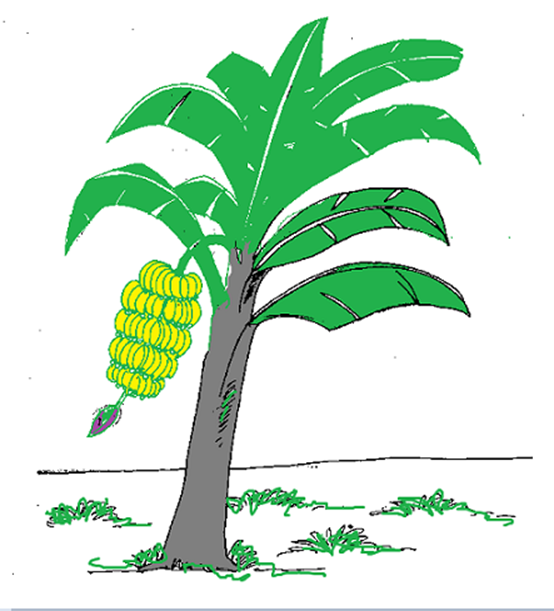
Colour the picture given below.

10th Standard, Social, History, Chapter 18 – THE FREEDOM STRUGGLE

10th Standard, Social, History, Chapter – 18

THE FREEDOM STRUGGLE

EXERCISES

I Fill in the blanks with suitable words:

1. The Indian National Congress was established in the year 1885.

2. The person who talked about the ‘Drain theory’ was Dadabhai Naoroji.

3. ‘Swarajya is my birth right’ was declared by Lokamanya Balgangadhara Tilak.

4. The Ali brothers started the Khilafat movement.

5. Separate nation for Muslims was proposed by Mohammad Ali Jinnah.

6. The Lahore Session of the Indian National Congress that took place in 1929 was presided by Jawaharlal Nehru.

7. Mahad tank and Kalaram temple movement was organised by Dr. B.R. Ambedkar.

8. The Jhansi regiment of Indian National Army was headed by Captain Lakshmi.

9. The place where Gandhiji carried out the Salt Satyagraha was Dandi in Surat.

10. Quit India movement was carried out in the year 1942.

II Fill in the blanks with given alternatives:

11. Founder of the Indian National Congress was _________.

a) Mahathma Gandiji b) A.O.Hume

c) Balagangadhara Tilak d) Gopalkrishna Gokhale

Answer: A.O.Hume

12. Publisher of ‘Maratha’ Paper was _________.

a) Jawaharlal Nehru b) Ras Bihari Bose

c) Balagangadhara Tilak d) V.D. Savarkar

Answer: Balagangadhara Tilak

13. Swaraj Party was established in the year _________.

a) 1924 b) 1923

c) 1929 d) 1906

Answer: 1923

14. President of Indian National Congress of Haripura session was _________.

a) Sardar valbha Bhai Patel b) Dr. B.R.Ambedkar

c) Lal Lajapath Roy d) Subhashchandra Bose

Answer: ) Subhash Chandra Bose

15. Iron man of India was _________.

a) Bhagath Sing b) Chandrashekar Azad

c) Abul Kalam Azad d) Sardar Valbahi Patel

Answer: Sardar Vallabhbhai Patel

III Discuss the following in groups and answer them:

16. Which were the organizations in India before the establishment of the Indian National Congress?

Answer: The organizations in India before the establishment of the Indian National Congress were as follows.

  1. ‘The Hindu Mela’,
  2. ‘The East India Association’,
  3. ‘Poona Sarvajanik Sabha’
  4. ‘The Indian Association’

17. What were the demands put forward by moderates to the British?

Answer: The demands put forward by moderates to the British are,

  1. development of industries
  2. reduction of military expenses
  3. improvement in educational standards
  4. forcing the British government to take up studies about poverty in the country

18. Analyse the drain theory.

Answer: The transfer of Indian wealth to England and called it as Drain Theory. The moderates critically analysed the ill-effects of the British rule in India. They placed before the people facts and figures about the drain of Indian wealth into England. Dadabhai Naoroji explained about the transfer of Indian wealth to England and called it as Drain Theory. He maintained that encouraging imports and reducing exports created a situation unfavourable to India, leading to drain of wealth. Since India had to bear the burden of paying wages, pension and administrative expenses of British officials, a lot of wealth was flowing into England. The Age of Moderates is also called the Age of Generous Nationalism.

19. Name the revolutionaries in freedom movement.

Answer: V.D.Savarkar, Aurobindo Ghosh, Shyamji Krishna Verma, Madam Cama, Khudiram Bose, Ramaprasad Bismil, Bhagat Singh, Chandrashekar Azad, Subhash Chandra Bose and Rani Lakshmi Bhai were prominent revolutionary leaders in freedom movement.

20. Explain the role of Balagangadhar Tilak in the freedom struggle.

Answer: One group of Congress members who became unhappy with the mild attitude of the moderates called them ‘political beggars’. Those who criticized the moderate thinking and propagated extremist ideas were known as Extremists. Aurobindo Ghosh, Lala Lajpat Rai, Bipin Chandra Pal and Balgangadhara Tilak were the prominent extremist leaders. Extremists maintained that good administration cannot be a substitute for independence. Balagangadhar Tilak declared “Swaraj is my birthright and I will get it at any cost”. Thus, an independent India was the aim of extremists. They started preparing the common people for freedom struggle. Through religious functions they started organizing people for a freedom movement. He encouraged people towards nationalism through the celebrations of Ganesha, Shivaji and Durga Pooja. Lokamanya Tilak utilized his ‘Kesari’ in Marathi and ‘Maratha’ newspaper in English for freedom struggle. Through these papers he called for the active participation in the fight for freedom. He was imprisoned for his revolutionary articles and enquiries were instituted against him. He wrote Geetha Rahasya in the jail.

21. What were the reasons for withdrawing of partition of Bengal?

Answer: Bengal was the centre of protests and anti-British sentiments. In order to curb this, Viceroy Lord Curzon proposed a plan to divide Bengal citing administrative problems.

Extremists opposed the partition of Bengal in the year 1905, highlighting it as an example of ‘Divide and Rule’ policy. Protests started mounting throughout the country against the division of Bengal in 1906. The Swadeshi movement was very important among these protests. Swadeshi movement called for a ban on western goods and the organizations supporting the import of European items. They encouraged the people to use Indian goods. In the backdrop of these severe protests, in 1911 the British government withdrew the Declaration of Partition of Bengal.

22. Describe Chowri-Chowra incident.

Answer: In the year 1920, Gandhiji gave a call for a non-co-operation movement against the British. During this period, there was a stiff opposition to the visit of the British Prince. There were widespread agitations against the visit throughout the country. After seeing the intensity of the agitation, fear surfaced in the mind of the British. At this juncture, thousands of people jumped into the freedom struggle at Chowri-Chowra in Uttar Pradesh. In the year 1922, police used their force against peaceful protestors. Enraged by this, the people tried to enter the police stations. Police resorted to firing. When their ammunition got exhausted, the police ran into the station. The angry protestors set the police station on fire. About 22 police were burnt alive inside the station. This incident is termed Chowri-Chowra incident in history.

23. Describe the Salt Satyagraha.

Answer: Gandhiji, after assuming the leadership of Civil disobedience movement, submitted a Charter of 11 demands to Viceroy Irwin. One of the demands was abolition of tax imposed on salt. But Irwin did not consider Gandhiji’s demands. As a result, in the year 1930, Gandhiji travelled from Sabarmati Ashram to Dandi in Surat on foot with his followers to produce salt in the seashore. In this manner, he started the Civil Disobedience Movement. This event in history is popular as ‘Dandi March’ or Salt Satyagraha.

24. What were the reasons for the failure of the Quit India movement?

Answer: On the 8th of August 1942, the Congress started the Quit India Movement. Gandhiji gave a call to the Indians to ‘Do or Die’. The reasons for the failure of the Quit India movement are as follows. 

  1. In this context, many leaders like Gandhiji, Nehru, Rajendra Prasad, Abul Kalam Azad, Sardar Vallabhbhai Patel, Acharya Kripalani, Kasturba Gandhi and others were imprisoned.
  2. The Quit India Movement failed due to harsh British repression including mass arrests, leading to a leadership vacuum and a shift to underground activity
  3.  Internal dissent from the Muslim League, the Hindu Mahasabha, and others weakened the movement’s unity. 
  4. The British government responded with severe violence, lathi charges, and firing on protesters. Many leaders, including Gandhi, were arrested, which created a leadership vacuum and pushed the movement underground. 
  5. After the quick arrests of leaders, the movement struggled with a lack of clear strategic leadership and a well-defined plan to achieve its objectives. 
  6. Several important political groups did not support the movement, weakening its broad appeal. 

25. Name the revolutionaries who took part in the Indian freedom struggle.

Answer: The revolutionaries who took part in the Indian freedom struggle are V.D.Savarkar, Aurobindo Ghosh, Shyamji Krishna Verma, Madam Cama, Khudiram Bose, Ramaprasad Bismil, Bhagat Singh and Chandrashekar Azad.

26. What was the result of the second Round Table Conference?

Answer: In second Round Table conference, B.R. Ambedkar asked for separate constituencies for the depressed classes during elections. This was not acceptable to Gandhiji. As a result, there was difference of opinion between Gandhiji and Ambedkar. Hence, even the II Round Table Conference ended without any conclusions. But the British Government declared that they would recognize the depressed classes’ request for separate constituency. Gandhiji began up a fast unto death agitation. Attempts were made to placate Ambedkar. Consequently, Poona Agreement was reached. As per this agreement, out of the existing constituencies, some were reserved for depressed classes. In such places, only depressed classes leaders had filed nomination as representatives of all people. Instead of a separate constituency, some areas were reserved for the depressed classes. The British government rejected the Indian demand for immediate self-government and responsibility. The failure of the conference led to Gandhi’s return to India and the resumption of the Civil Disobedience Movement.

27. Give an account of the achievements of Subhash Chandra Bose in the independence struggle.

Answer: The most prominent among the revolutionary fighters of India was Subhash Chandra Bose. Although he secured the 4th rank in the Indian Civil Services examination, he rejected the prestigious post in the British Service, and took an active part in the freedom struggle. In the early part of the 1930, Subhash Chandra Bose was engaged in the attempt to organize Indians settled abroad and equip them for fighting against the British. He travelled to Vienna, Berlin, Rome, Istanbul and other countries and inspired the Indians there to support their motherland. Bose became the President at the Haripur Session of the Indian National Congress in 1939. Disappointed with the Congress and Gandhiji’s techniques, Netaji left the Congress and established a separate party called Forward Block. This party aimed to bring in progressive, fast changes. Subhash opposed the war preparations of the British and the participation of India in the World War. As a result, he was arrested by the British.

Subhash Chandra Bose escaped from house-arrest and left for Germany. He gained the support of the German dictator, Hitler to make India free. He urged the Indians: “Give me blood, I will give you freedom!” There was a ladies wing in the INA named Jhansi Regiment. Captain Lakshmi was the Commandant of this regiment.

Subhash had planned a military strategy through Rangoon to capture Delhi which was in the clutches of the British. By that time, thousands of soldiers of the INA had prepared themselves to occupy Delhi. Towards this end, as per Netaji’s command, they began an armed attack on the Burma border. Fierce fighting took place between the British and the INA. In the midst of this, Subhash died in a plane accident. The British army captured the Burmese capital, Rangoon and arrested the INA members.

28. Describe the tribal revolts in the Indian freedom struggle.

Answer: The Tax and Forest Act implemented by the British East India Company provoked the tribal revolt. Of the tribal rebellions, the Santala’s revolt and Munda movement are prominent. In this regard, the Halagali Hunters rebellion in Karnataka is noteworthy.

The Santala tribal revolt can be termed India’s first movement. These tribals lived in Bengal and Orissa hillocks. When the permanent landlord system was brought into force by the British, the people of this community became destitutes. Their lands went to the landlords. The landlords, money-lenders and the British government behaved in a way that triggered intolerance in the Santalas. The Company exploited the decent and peace-loving attitude of the Santalas. Enraged by this, the Santalas held secret meetings and decided to loot the landlords and prominent citizens. The agitation became intense in Barahat area and also in Bhagatpur and Rajamahal. The rioters killed their enemies. As a result, the landlords and money-lenders ran away. The government used the army to stem the revolt and was successful. Many rioters were arrested. Although the revolt by the Santalas ended, it lent its voice to many similar protests later.

III Activities:

1. Collect pictures of freedom fighters and prepare an album.

2. With the help of the internet, collect pictures and information about Jallianwallah Bagh tragedy and Dandi Satyagraha.

3. Arrange lectures on Gandhiji’s policies of Satyagraha and non-violence.

IV Project:

1. Enact dramas depicting patriotism in your school.
10th Standard, Social, History, Chapter 18 – THE FREEDOM STRUGGLE

10th Standard, Social, History, Chapter – 18

THE FREEDOM STRUGGLE

EXERCISES

I Fill in the blanks with suitable words:

1. The Indian National Congress was established in the year 1885.

2. The person who talked about the ‘Drain theory’ was Dadabhai Naoroji.

3. ‘Swarajya is my birth right’ was declared by Lokamanya Balgangadhara Tilak.

4. The Ali brothers started the Khilafat movement.

5. Separate nation for Muslims was proposed by Mohammad Ali Jinnah.

6. The Lahore Session of the Indian National Congress that took place in 1929 was presided by Jawaharlal Nehru.

7. Mahad tank and Kalaram temple movement was organised by Dr. B.R. Ambedkar.

8. The Jhansi regiment of Indian National Army was headed by Captain Lakshmi.

9. The place where Gandhiji carried out the Salt Satyagraha was Dandi in Surat.

10. Quit India movement was carried out in the year 1942.

II Fill in the blanks with given alternatives:

11. Founder of the Indian National Congress was _________.

a) Mahathma Gandiji b) A.O.Hume

c) Balagangadhara Tilak d) Gopalkrishna Gokhale

Answer: A.O.Hume

12. Publisher of ‘Maratha’ Paper was _________.

a) Jawaharlal Nehru b) Ras Bihari Bose

c) Balagangadhara Tilak d) V.D. Savarkar

Answer: Balagangadhara Tilak

13. Swaraj Party was established in the year _________.

a) 1924 b) 1923

c) 1929 d) 1906

Answer: 1923

14. President of Indian National Congress of Haripura session was _________.

a) Sardar valbha Bhai Patel b) Dr. B.R.Ambedkar

c) Lal Lajapath Roy d) Subhashchandra Bose

Answer: ) Subhash Chandra Bose

15. Iron man of India was _________.

a) Bhagath Sing b) Chandrashekar Azad

c) Abul Kalam Azad d) Sardar Valbahi Patel

Answer: Sardar Vallabhbhai Patel

III Discuss the following in groups and answer them:

16. Which were the organizations in India before the establishment of the Indian National Congress?

Answer: The organizations in India before the establishment of the Indian National Congress were as follows.

  1. ‘The Hindu Mela’,
  2. ‘The East India Association’,
  3. ‘Poona Sarvajanik Sabha’
  4. ‘The Indian Association’

17. What were the demands put forward by moderates to the British?

Answer: The demands put forward by moderates to the British are,

  1. development of industries
  2. reduction of military expenses
  3. improvement in educational standards
  4. forcing the British government to take up studies about poverty in the country

18. Analyse the drain theory.

Answer: The transfer of Indian wealth to England and called it as Drain Theory. The moderates critically analysed the ill-effects of the British rule in India. They placed before the people facts and figures about the drain of Indian wealth into England. Dadabhai Naoroji explained about the transfer of Indian wealth to England and called it as Drain Theory. He maintained that encouraging imports and reducing exports created a situation unfavourable to India, leading to drain of wealth. Since India had to bear the burden of paying wages, pension and administrative expenses of British officials, a lot of wealth was flowing into England. The Age of Moderates is also called the Age of Generous Nationalism.

19. Name the revolutionaries in freedom movement.

Answer: V.D.Savarkar, Aurobindo Ghosh, Shyamji Krishna Verma, Madam Cama, Khudiram Bose, Ramaprasad Bismil, Bhagat Singh, Chandrashekar Azad, Subhash Chandra Bose and Rani Lakshmi Bhai were prominent revolutionary leaders in freedom movement.

20. Explain the role of Balagangadhar Tilak in the freedom struggle.

Answer:

21. What were the reasons for withdrawing of partition of Bengal?

22. Describe Chowri-Chowra incident.

23. Describe the Salt Satyagraha.

24. What were the reasons for the failure of the Quit India movement?

25. Name the revolutionaries who took part in the Indian freedom struggle.

26. What was the result of the second Round Table Conference?

27. Give an account of the achievements of Subhash Chandra Bose in the independence struggle.

28. Describe the tribal revolts in the Indian freedom struggle.

III Activities:

1. Collect pictures of freedom fighters and prepare an album.

2. With the help of the internet, collect pictures and information about Jallianwallah Bagh tragedy and Dandi satyagraha.

3. Arrange lectures on Gandhiji’s policies of satyagraha and non-violence.

IV Project :

1. Enact dramas depicting patriotism in your school.
9th Standard, Social, History, CHAPTER 17 – THE AHOM DYNASTY, THE Mughals AND THE MARATHAS

0

9th Standard, Social, History, CHAPTER – 17

THE AHOM DYNASTY, THE Mughals AND THE MARATHAS

EXERCISES

I. Fill in the blanks with suitable words.

1. The founder of Ahom dynasty Sukapha.

2. The founder of the Mughal dynasty was Babur.

3. The most famous emperor among the Mughals was Akbar.

4. The king who built the Taj Mahal at Agra was Shahjahan.

5. The Mughal emperor who established the new religion Din-e-Ilahi was Akbar.

6. Shivaji’s mother was Jijabai.

II. Answer the following questions by discussing with your group.

7. Write briefly important achievements of Ahom dynasty. 

Answer: Ahoms were migrated from Thailand and Myanmar, settled in Assam. Despite of their external origin, they quickly adopted Indian culture. Lachith became the commander-in-chief of Ahom army. This post was called as ‘Borphukhan’. So, he was called as ‘Lachith Borphukhan’. He conducted strict training sessions for the army and introduced modernized warfare weapons. By driving away Moghal officers and army, he recaptured Itkuli fort and consolidated his position. He also reconquered Guwahati. In the battle at Alboi, Ahoms displayed great courage, by defeating the Mughals. However this victory came at the cost of many soldiers losing their lives. After the death of Chakradwaja Singha, Udayadithya Singha ascended the throne in 1670. He confronted persistent Mughal attacks, and a significant naval attack took place at Sarai Ghat in 1671, the Ahoms were most victorious. In the same year Lachith Borphukhan passed away due to ill health. The Ahom kings established six capitals in their kingdom at different times. Over the course of 598 (1228-1826) years, the Ahoms defeated Moghals 17 times securing their rule over North-East India.

8. Describe the military achievements of Babar.

Answer: Babur had to ascend the throne at the very tender age of 11 years. When he lost his kingdom and was wandering aimlessly, he got the inspiration to attack India, and he invaded India five times. He defeated the Delhi sultan Ibrahim Lodhi in the battle of Panipat in 1526 and established the Mughal dynasty in India. This battle is known as the first battle of Panipat. Delhi was his capital. Over a period of four years, he defeated Rana Sangramsingh of Mewad, the Rajput king Mediniraya of Chanderi and Ibrahim Lodhi’s brother, Mohammad Lodhi. Babur conquered Panipat, Goghra and Kanwa. He established Mughal rule over a large area in North India.

9. Compare and contrast the present-day administrative system with that of Sher Shah.

Answer: Sher Shah’s was the head of the administrative system. He had an efficient cabinet ministry, he had complete control over Civil and Military administration. There were 25,000 

infantry, 1,50,000 cavalry and 500 elephants in his army. The cavalry was very strong. The army was divided into various troops and Commandants had been appointed to supervise them. Sher Shah himself paid attention to the organization of the army, arms and ammunition and the discipline of the soldiers. If there was damage to crops during the movement of troops, the government compensated the farmers. Sher Shah constructed new forts at Delhi, Rohtas, Kanauj and Patna.The land in the kingdom had been classified as excellent, aver-age and bad according to their level of fertility. The farmers gave of their income as land tax to the government. Sher Shah was known for his impartial justice. Hence he had earned the title “Sultan of the fair justice”. The Sultan was the highest judge in the kingdom. He decided all the final appeals. He conducted his court every Wednesday evening. Sher Shah brought a new coin ‘Daam’ and ‘Rupiah’ into circulation. 

This coin weighed 180 liquorice seeds. All the other Mughal kings continued this practice.

10. What are the areas won by Akbar?

Answer: After the death of Humayun, Hemu, the military General of Bengal king Mohammad Shah Abdali, conquered Delhi and Agra. This led to the terrific battle at Panipat in 1556 between Hemu and the Mughals. This is known as the II Battle of Panipat. Akbar emerged victorious in this battle. His Prime Minister and royal representative, Bairamkhan came to Akbar’s assistance during the war. With the help of mighty army, Akbar conquered Malwa, Jaipur, Gondavan, Chittor, Ranathambhor, Kalinjar, Gujarat and Bengal. The Battle of Haldighat is the most significant battle in the history of medieval India. In the battle 

at Haldighat, the Mughal army was v i c t o r i o u s . T h e remaining states of Kashmir, Sindh, Orissa, Baluchistan, K h a n d h a r a n d Ahmednagar came under Akbar. Thus, for the first time, the Mughal kingdom expanded and laid solid foundation for Mughal rule.

11. Describe the contributions of Shahjahan to art and architecture.

Answer: He constructed the famous, immensely valuable ruby-studded Peacock throne. He appointed his son Aurangzeb as the royal representative of Deccan. In 1636, he defeated the Portuguese and conquered Ahmednagar. He brought into practice measurement and evaluation of land in the Deccan region. Later events led Aurangzeb to become the Sultan. During Shahjahan’s time, trade developed between India and the countries of West Asia and Europe. Shahjahan constructed the famous ‘Taj Mahal’ in Agra in memory of his beloved wife, Mumtaz. The Red Fort at Delhi and the buildings in it are the contributions of Shahjahan. Hence, his period is referred as the ‘Golden Age of Mughal Art and Architecture’

12. Describe Shivaji’s system of administration.

Answer: Shivaji had organized an efficient administrative system in his vast kingdom. He had divided his kingdom into many provinces. They were called Swaraj and Mughal areas. Marathi was the language of administration. There were ministers known as Asthapradhans in the central government to assist the king. In addition to them, there were other officials. Province, district and village were the administrative units. Shivaji’s system of revenue collection was Ryotwari system, favorable to farmers. He abolished the jahagir revenue system. In Shivaji’s administration, traditional system of justice was in practice. The village panchayat used to dispense justice in villages. The Maratha army had infantry, cavalry, elephant units and cannon units.

13. Explain the achievements of Bajirao I.

Answer: Baji Rao I, got appointed as Peshwa when he was only 19 years old, he was an unparalleled warrior. With the intention of expanding the Maratha kingdom in North India, he conquered Gujarat, Malwa and gained the authority to collect chauth and sardeshmukhi taxes. He invaded Chitradurga and Srirangapatna of Karnataka. When Baji Rao declared war against the Mughals, Nizam-ul-Mulk, with the intention of assisting the Mughals, tried to march towards Delhi. But he lost to the Marathas in a battle near Bhopal. Due to this, the vast stretch of land between the Narmada and Chambal rivers and 50 lakh rupees came to Baji Rao as war compensation. In addition to this, he conquered Salcet and Basin from the Portuguese and Janjira from the Siddhis. Pune became his administrative centre. At this juncture, the members of the Maratha union, Scindhia of Gwalior, Holkar of  Indore, Bhonsle of Nagpur and Gaikwad of Baroda decided together to become independent. Baji Rao I not only ruled with efficiency but also re-established the glory of the Maratha empire. Hence he was called Shivaji II.

III. Activities:

Write an essay on how Shivaji’s mother Jijabai was successful in inculcating patriotism in Shivaji.

Answer: Shivaji’s mother, Jijabai, was a pious woman who inculcated religious fervor, uprightness, honesty and sincerity in her son. Jijabai used stories from ancient epics like the Ramayana and Mahabharata, as well as the lives of great warriors such as Maharana Pratap, to impart values of courage, justice, and duty towards the land and people. These narratives provided Shivaji with ideals and inspiration for his future endeavors. She instilled a strong sense of duty and a deep commitment to protecting the motherland and the dignity of her people, emphasizing the importance of fighting for freedom and self-rule. Her resilience in the face of adversity provided a powerful example for Shivaji to develop similar qualities of courage and determination. Jijabai ensured Shivaji received a thorough education in Hindu scriptures and traditions, fostering a strong sense of identity and pride in his Maratha heritage. She recognized the importance of physical strength and skill in warfare, encouraging rigorous training in martial arts to equip Shivaji with the tools to defend his people. Beyond her maternal love, Jijabai was a mentor who provided wise counsel and unwavering support, fostering the leadership qualities necessary to navigate complex political and military landscapes. 

7th Standard, Social, History, CHAPTER 15 – SOCIAL AND RELIGIOUS REFORMS

0

7th Standard, Social, History, CHAPTER 15

SOCIAL AND RELIGIOUS REFORMS

EXERCISES

 I Fill in the blanks with a suitable word.

1 Raja Ram Mohan Roy started Samvada Koumudi.

2 Mahatma Jyotiba Phule wrote the book Gulamagiri.

3 ‘Dayananda Anglo Vedic College” in Lahore was started by Lala Hamsaraj.

4 Panditha Ramabai started ‘Mukti Mission’ for the upliftment of women.

 II Answer the following in a word or sentence each.

1 Who is called ‘The Father of Indian Renaissance’?

Answer: Raja Ram Mohan Roy is called ‘The Father of Indian Renaissance’.

2 Who is Mahadev Govind Ranade?

Answer: Mahadev Govind Ranade was one of the main leader of Prarthana Samaj.

3 Who is the founder of Satya Shodak Samaj?

Answer: The founder of Satya Shodak Samaj was Mahatma Jyotiba Phule.

4 ‘‘Arise! Awake! Stop not till the goal is reached”. Who gave this call?

Answer: Arise! Awake! Stop not till the goal is reached”. This call given by Swami Vivekananda.

5 Who is Annie Besant?

Answer: Dr. Annie Besant was the President of Theosophical Society (Brahmavidya Samaja)

6 Who was the leader of the Aligarh Movement?

Answer: Syed Ahmed Khan was the leader of the Aligarh Movement. 

7 Name the institution started by Sri Narayana Guru.

Answer: ‘Sri Narayana Dharma Paripalana Yogam’ is the institution started by Sri Narayana Guru.

8 Who was the author of ‘Stree Purusha Tulana’?

Answer: Tharabai Shinde was the author of ‘Stree Purusha Tulana’.

9 Who was the famous Christian social reformer of India?

Answer: Panditha Ramabai was a famous Christian social Reformer of India. 

 III Discuss in groups and answer the following questions:

1 Write a note on social and religious reformation measures of Raja Ram Mohan Roy.

Answer: Raja Ram Mohan Roy established ‘Brahma Sabha’ in 1828 C.E. This organization renamed as ‘Brahma Samaj,’ the following year. Raja Ram Mohan Roy was the representative of harmonious blend of Eastern and Western philosophies. Brahma Samaj vehemently opposed practices of sati, caste system, idol-worship, polygamy, child marriage and all kinds of superstitions. Raja Ram Mohan Roy firmly believed that inhuman practices could be eradicated through western education. Raja Ram Mohan Roy who advocated widow marriage and monotheism, began his social reformation movement by starting a newspaper named ‘Samvada Kaumudi’. Raja Ram Mohan Roy attempted to cleanse the Hindu religion through rationalism. In order to justify his stand, he translated five Upanishads from Sanskrit to Bengali. Ram Mohan Roy was one of the earliest persons to advocate English education. He ran an English school using his own funds. He also established a College of Vedanta. He was one of the pioneers in the field of Journalism too. He published many magazines. To sum up, he dedicated his life to fight against social injustice. 

2.  What is the role of Jyotiba Phule in social reformation?

Answer: A non-Brahmin movement was started by Mahatma Jyotiba Phule (1827-1890 

C.E) in Maharashtra. With an intention to create awareness among the lower strata of the society in Maharashtra, he established the Satya Shodak Samaj. He started schools for untouchables, orphans and widows. He condemned the Brahmin priestly class and explained his philosophy in the form of a dialogue in his book ‘Gulamgiri’ (Slavery). Along with his wife Savitribai, he opened a school for girls in Pune. In 1863 C.E he attempted to put an end to the incidents of female infanticide by starting rehabilitation centres for child widows. He encouraged widow remarriages. B.R. Ambedkar had considered Mahatma Jyotiba Phule as his spiritual mentor.

3 What are the objectives of the Theosophical society?

Answer: The Objectives of the Theosophical Society are as follows.

1. To establish Universal Brotherhood, irrespective of all differences.

2. To do a comparative study of Religion, Philosophy and Science.

3. To investigate the unexplained laws of Nature and the powers latent in man.

4. What is the role of Syed Ahmed Khan in reforming the Muslim community?

Answer: Sir Syed Ahmed Khan was born in 1817 C.E. at Delhi, he was appointed as the Judicial Officer in the British East India Company. He saw that his community had lost economic and social opportunities due to lack of English education. Hence, he desired that his community would find suitable representation in the government, by getting educated. As a social reformer, he opposed the purdah system, polygamy and the system of talaq. He began ‘Translation Society’ in order to enable translation of English scientific and literary works into Urdu. Later on, the society was renamed as ‘Scientific Society’. In order to spread scientific thinking among Muslims, he started the magazine ‘Aligarh Institute Gazette’. This magazine was published in both English and Urdu. 

5. What were the measures taken by Sri Narayana Guru in reforming backward communities?

Answer: Sri Narayana Guru was born in 1854 C.E. in a family of the ‘Ezhava’ community in Tiruvankur. In 1903 C.E. he established an organisation named ‘Sri Narayana Dharma Paripalana Yogam’. Through that organization, he strived to achieve social, economic and cultural progress of the Ezhava and other backward communities of Kerala. He opposed caste system and animal sacrifice. He started Sanskrit schools and gave admission to everybody, irrespective of their caste and religion. He built around 30 temples. All people of Kerala including untouchables, were allowed to enter these temples. He wanted every temple to have a good library with the holy books of all the religions. Sri Narayana 

Guru’s vision is evident in this statement: “One God, One Religion and One Caste”. Even Karnataka came under his influence. Sri Narayana Guru passed away in 1928 C.E.

6. What was the role of Panditha Ramabai in the reformation of women?

Answer: Panditha Ramabai was born in Gangamoola of Western Ghats as the daughter of Anantha Shastri Dongre and Lakshmibai. She received education, against the practice of the times. She accepted Christianity while studying in England. She dedicated her life for the betterment of women of India and established an organisation ‘Mukti Mission’ in 1889 C.E. This institution is active till today and provides rehabilitation to widows, orphans and alcoholics.

IV Match the following names in column A with related words in column B. 

                        A                                                          B

1. Swami Vivekananda                        (a) Aligarh Movement

2. Swami Dayananda Saraswati          (b) Sathya Shodhak Samaja

3. Syed Ahmed Khan                           (c) Theosophical society

4. Jyotiba phule                                   (d) Ramakrishna Mission

5. Annie Besant                                   (e) Arya Samaja

Answer:

A                                                          B

1. Swami Vivekananda                        (d) Ramakrishna Mission

2. Swami Dayananda Saraswati          (e) Arya Samaja

3. Syed Ahmed Khan                           (a) Aligarh Movement

4. Jyotiba phule                                   (b) Sathya Shodhak Samaja

5. Annie Besant                                   (c) Theosophical society

V Discuss. 

“Upliftment of women is upliftment of the nation”. Is this statement of Swami Vivekananda relevant even to this day? Discuss in groups.

Activity

Read the biographics of M.G. Ranade, Jyotiba Phule, Raja Ram Mohan Roy, Swami Vivekananda, Swami Dayananda Saraswati, Sir Syed Ahmed Khan and Sri Narayana Guru. (Refer Bharata Bharati series)

10th Standard, Social, HISTORY Chapter 17 – THE FIRST WAR OF INDIAN INDEPENDENCE (1857)

0

10th Standard, Social, HISTORY Chapter 17

THE FIRST WAR OF INDIAN INDEPENDENCE (1857)

EXERCISES

I Fill in the blanks with suitable words:

1. British historians refer to the 1857 revolt as ‘The Sepoy Mutiny’.

2. During the 1857 revolt, at Barakpura, British officer was killed by Mangal Pandey.

3. Jhansi Rani fought against British and took Gwalior under her control.

4. The declaration passed by the British Queen in 1858 is called ‘Magna Carta’.

II Discuss the following in groups and answer them:

5. The political factors inspired the revolt of 1857. How?

Answer: The political factors which inspired the revolt of 1857 are,

  1. Many kingdoms lost their rights due to the promulgation of Doctrine of Lapse brought about by the British. Satara, Jaipur, Jhansi, Udaipur and other kingdoms came under British control.
  2. Dalhousie cancelled the princely titles of the Nawabs of Tanjore and Carnatic kingdoms. The Mughal sultans, the Nawab of Oudh and other kings were dethroned.
  3. Consequently, lakhs of soldiers who were dependent on these kings, became unemployed. This became a strong cause for the protest of 1857 against the British.

6. The economic changes of the time were responsible for the 1857 revolt. How?

Answer: The economic changes of the time which were responsible for the 1857 revolt are as follows.

  1. Due to the industrial revolution in England, Indian handicrafts and cottage industries suffered heavily.
  2. England, instead of being a trading country, became a hub of industries. The Indian craftsmen became unemployed.
  3. Primarily, the textile and wool industries became sick and people lost their jobs. The cottage industries too suffered a death blow.
  4. The British imposed a heavy tax on sale of Indian goods in England.
  5. Because of the zamindari system, the landlords, acting as commission agents between the Government and the farmers, exploited the farmers. The right given to the taluks to collect tax was withdrawn.
  6. An ‘Inam Commission’ was appointed and all the gifted lands without documents (‘Inam lands’) were taken back. Due to this, the farmers felt insulted and experienced many financial problems. This too led to the revolt of farmers against the government.
  7. What were the factors that disturbed the religious sentiments of the soldiers during the 1857 revolt?

Answer: The Indian soldiers in the British army were being given new rifles called ‘Royal Enfield’. A rumour spread among the soldiers that the cartridges used in these rifles were greased with the fat of cow and pigs. While cows were sacred to the Hindus, pigs were blasphemous for Muslims. This incident became the immediate cause for the revolt. When the British officers ordered the Indian soldiers to pull the safety catch with the help of their teeth, the soldiers rejected the command and revolted against their superiors. At this juncture, an Indian soldier named Mangal Pandey killed a British official. This was the factors that disturbed the religious sentiments of the soldiers during the 1857 revolt.

8. What were the immediate causes for the First War of Independence?

Answer: Most of the Indian soldiers in the British army believed that if they fought together, they could drive away the British from India. In this situation, the soldiers were being given new rifles called ‘Royal Enfield’. A rumour spread among the soldiers that the cartridges used in these rifles were greased with the fat of cow and pigs. While cows were sacred to the Hindus, pigs were blasphemous for Muslims. This incident was the immediate causes for the First War of Independence.

9. Make a list of the reasons for the failure of the revolt.

Answer: The reasons for the failure of the First War of Independence of 1857 are as follows.

  1. The movement did not spread to the whole country. This struggle was intended to protect the interests of a few rather than getting freedom for the country.
  2. Instead of being an organized struggle, it erupted due to certain unexpected reasons.
  3. The unity among the British forces and lack of it among the Indian soldiers also led to the failure.
  4. There was no proper direction or proper leadership. In addition, there was a lack of strategy, expertise among soldiers, effective leadership, discipline and direction.
  5. Many provincial kings, on account of their loyalty to the British, did not support the struggle.
  6. The people lost confidence in the soldiers due to their arson and looting.

10. What were the features of the declaration of the British Queen in 1858?

    Answer: The features of the declaration of the British Queen in 1858 are as follows.

    1. The agreements made by the East India Company with the kings were accepted.
    2. Ambitious expansion plans had to be given up.
    3. A stable government had to be provided to Indians.
    4. There would be equality before law.
    5. The government would exhibit religious tolerance and not to interfere in religious matters of the country.

    III Activities:

    1. On the Indian map, mark the kingdoms which were taken over by the British with the help of the Doctrine of Lapse.

    2. Organise a speech from an expert on “The 1857 revolt was the First War of Independence”.

    10th Standard, Social, Geography, CHAPTER – 14, INDIA – WATER RESOURCES

    0

    10th Standard, Social, Geography, CHAPTER – 14

    INDIA – WATER RESOURCES

    EXERCISES

    I Fill in the blanks with suitable words:

    1. The Sorrow of West of Bengal is Damodar River.

    2. The Sorrow of Bihar is Kosi River.

    3. Biggest irrigation project of Karnataka is Upper Krishna.

    4. Pampa Sagara Dam is in Vijayanagara district of Karnataka.

    5. Hirakud project is built across Mahanadi River.

    II. Answer the following questions in brief:

    6. What is irrigation? What are the types of irrigation?

    Answer: Irrigation means supply of water to agriculture from canals, wells and tanks artificially or manually. The types of irrigation are as follows.

    1. Well irrigation

    2. Canal irrigation

    3. Tank irrigation.

    1. Well irrigation: Supplying ground water by digging or drilling wells is called well irrigation. There are two types of wells. They are 1.Open wells 2.Borewells.

    2. Canal irrigation: India is one of the important country in the world using canal irrigation. Vast areas of cultivable land can be irrigated by this method. There are two types of canal irrigation. They are,

    a. Flood canals b. Perennial canals

    3. Tank irrigation: It is practice in India since ancient times. Water is stored and supplied to cultivable areas through small canals or pipes.

    7. What is multi-purpose river valley project? What are its objectives?

    Answer: India has undertaken the construction of many river valley projects for the maximum utilization of river water resources. These projects have other purposes besides providing water for agricultural use. Such projects are called multi-purpose river valley projects. The main objectives of these projects are as follows.

    1. Providing irrigation facility

    2. Production of hydro-electric power

    3. Prevention of floods

    4. Creating facility for water transportation

    5. Providing water for domestic and industrial use

    6. Preventing soil erosion

    7. Developing fisheries

    8. Enhancing forest wealth.

    8. Name the hydro-electric power projects of Karnataka.

    Answer: The hydro-electric power projects of Karnataka are,

    1. Shivanasamudra
    2. Tungabhadra
    3. Jog
    4. Bhadra
    5. Alamatti
    6. Kali
    7. Supa
    8. Kadra
    9. Kodasalli Dam.
    10. ’Rain water harvesting is compulsory today’. Why?

    Answer: ’Rain water harvesting is compulsory today’. Because Water is very precious. Although India has vast water resource, it is most unevenly distributed. Rainfall is confined to the rainy season. Even in areas of heavy rainfall, water shortage is seen during the summers. The only solution to the drought condition prevailing in India is ‘Rain Water Harvesting’. Collection of rain water is called “Rain Water Harvesting”.

    1. What is National Power Grid?

    Answer: India generates power from various sources. All the states do not have sufficient electric power supply at all times. Hence, to supply power from surplus states to deficit states, a National Power Grid is established. With its help, excess power from any state can be supplied to any other power deficit state.

    III. Match the following projects in ‘A’ with states ‘B’:

    A                                              B

    i. Bhakra dam                          a. Lalbahaddur Shastry Sagar

    ii. Tungabhadra dam               b. Basava Sagar

    iii. Almatti dam                        c. Pampa Sagar

    iv. Narayanapura dam            d. Govinda Sagar

    e. Narmada Sagar

    Answer:

    A                                              B

    i. Bhakra dam                          d. Govinda Sagar

    ii. Tungabhadra dam               c. Pampa Sagar

    iii. Almatti dam                        a. Lalbahaddur Shastry Sagar

    iv. Narayanapura dam            b. Basava Sagar

    Additional Questions:

    1. Name the important multi-purpose river valley project of independent India.

    Answer: The important multi-purpose river valley project of independent India are as follows.

    1. Damodar River Valley Project
    2. Bhakranangal Project
    3. Kosi Project
    4. Hirakud Project
    5. Tungabhadra project
    6. Nagarjunasagar Project
    7. Upper Krishna
    8. Narmada Valley Project
    9. Which are the important hydro-electric power projects of different states in India?

    Answer: The important hydro-electric power projects of different states in India are as follows.

    1. Karnataka: Shivanasamudra, Tungabhadra, Jog, Bhadra, Alamatti, Kali, Supa, Kadra, Kodasalli Dam.

    2. Andhra Pradesh: Srisailam project, Ramapadasagar Project, Sileru project.

    3. Telangana: Nagarjunasagar

    4. Tamil Nadu: Mettur project, Paikara eletric project, Periyar project, Kundha project, Moyar project, Kodayar project etc.

    5. Madhya Pradesh: Bansagar, Gandhisagar, Pench Project.

    6. Maharashtra: Tata hydro-electric power project, Beera project, Vaitarana project, Koyna project.

    7. Odisha: Hirakud project, Kolab project, Rangali project, Naraja project.

    8. Bihar: Kosi project.

    9. Gujarat: Kakrapara project, Kadana project, Ukai project.

    10. Jharkhand: Suvarnarekha project.

    In addition to the above, many other National Power Grid projects are found.